
If you or a parent sometimes forget tablets, start by talking to your pharmacist. A simple weekly pill box or a phone alarm is enough for many people. An automatic dispenser with an alarm can help someone who often forgets or mixes up doses. Not every medicine can go in a pill box, so always check with the pharmacist before you move tablets out of their packs.
Talk to the pharmacist first
A pharmacist can look at all the medicines together and suggest the simplest way to manage them. The NHS says your GP practice may also offer a free structured medication review with a pharmacist or another health professional. If you care for someone, try to go with them.
Ask the pharmacist:
- whether each medicine is safe to keep in a pill box
- whether the timings could be made simpler
- whether large-print labels, a reminder chart or easier-to-open lids would help
- what to do if a dose is missed
Never change when or how a medicine is taken, or crush or split tablets, without checking with the pharmacist or prescriber first.
Can the pharmacy fill a blister pack for me?
Some pharmacies can supply medicines in a sealed tray with a compartment for each dose. These are called multi-compartment compliance aids, or blister packs. Some people call them dosette boxes.
The Royal Pharmaceutical Society says these packs should not be the automatic choice. It found too little evidence that they help people take medicines better, and says original packs with good support should come first. NHS guidance says:
- the pharmacist decides whether a blister pack is right, after looking at your needs
- if you have a long-term disability, the pharmacy must consider changes that make it easier for you, and a blister pack is one option
- other options, such as reminder charts, large-print labels and easy-open lids, may suit you better
- if you do not qualify, the pharmacy may offer one and charge a fee
A pharmacist may advise against a blister pack for some medicines. Examples include medicines that are affected by damp or air, “when needed” medicines, liquids, inhalers and eye drops, medicines that must be kept in the fridge, and medicines whose dose changes with blood tests.
If you fill your own pill box, the same limits apply. Ask the pharmacist which medicines should stay in their original packs.
Types of pill organiser
Weekly pill boxes
A weekly box has a section for each day, often split into morning, midday, evening and bedtime. You fill it once a week. You can see at a glance whether today’s dose has been taken.
Look for:
- clear, large print on each compartment
- lids that open easily if hands are stiff or weak
- daily sections that come out, for days away from home
Monthly pill organisers
A monthly organiser holds about a month of doses, usually morning and evening. It means filling it less often, but a mistake when filling it can repeat for longer. Most suit simple, stable routines.
Automatic dispensers with alarms
An automatic dispenser is a locked box with a turning tray. At each dose time it sounds an alarm and opens just that compartment. The other doses stay locked away, which helps prevent double doses.
They suit someone on a stable routine who forgets or gets confused about doses. They need filling, either by a family member or, in some areas, by the pharmacy. Some councils supply them as part of their telecare service, so ask your council.
Phone reminders
- iPhone: the Health app has a Medications section. You add each medicine and its schedule, and your phone reminds you at dose times. If you have not logged a dose, it reminds you again 30 minutes later.
- Any phone: a repeating daily alarm or calendar reminder is free and simple.
- NHS App: you can order repeat prescriptions and choose your pharmacy. We could not find a feature that reminds you to take your medicines.
A family member can also ring at dose times, or arrange for care workers to visit.
Our picks
Prices change, so we give rough bands.
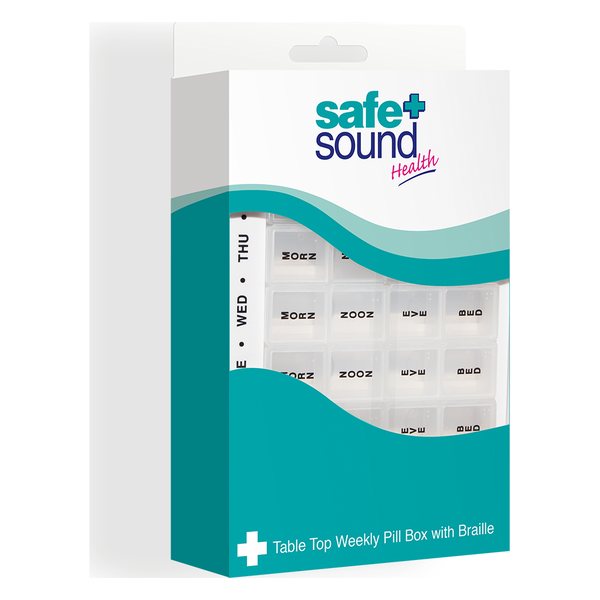
Low-cost pick
Safe and Sound Jumbo Weekly Pill Organiser with Braille: see it on Amazon (affiliate link, opens in a new tab)
About £13 to £15
- Type
- Weekly, 4 doses a day
- Compartments
- 28, extra large, print and Braille
- Helpful features
- Flip-top lids, days lift out
- Best for
- Sight loss or stiff hands
Affiliate link
Picture: Safe and Sound Health
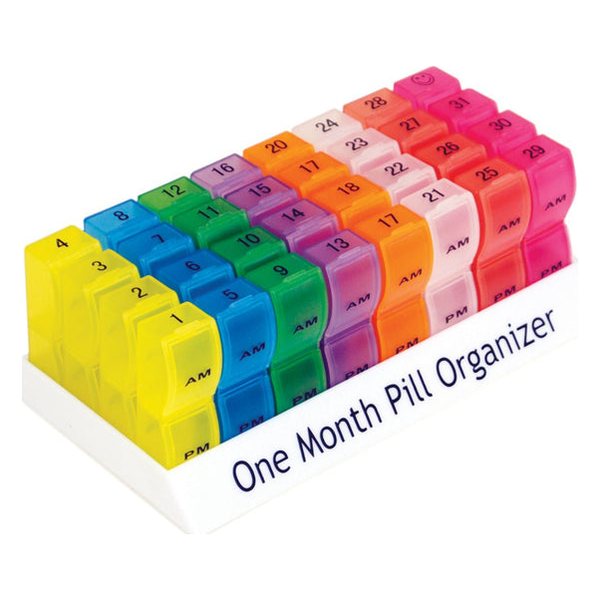
Monthly option
Aidapt One Month Pill Organiser: see it on Amazon (affiliate link, opens in a new tab)
About £15 to £20
- Type
- Monthly, morning and evening
- Compartments
- 32, dated
- Helpful features
- Flip-up lids
- Best for
- Simple, stable routines
Affiliate link
Picture: Aidapt
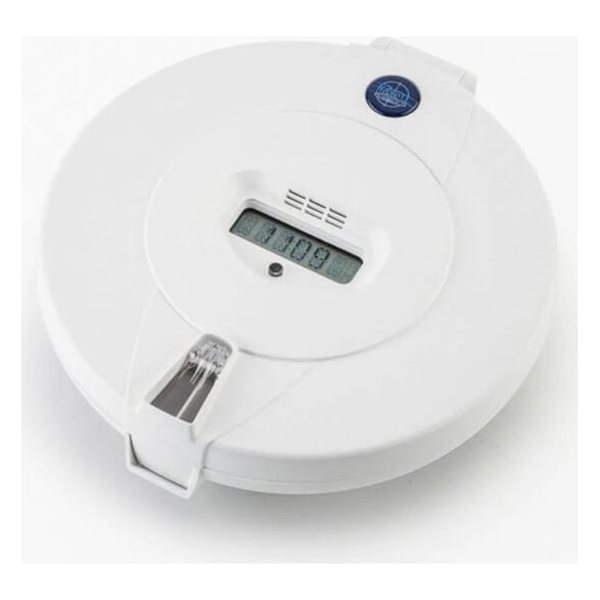
Automatic dispenser
Pivotell Advance Automatic Pill Dispenser: see it on Amazon (affiliate link, opens in a new tab)
About £120 to £125 with VAT relief; more without
- Type
- Automatic dispenser with alarms
- Compartments
- 28, others locked
- Helpful features
- Alarm, flashing light, screen
- Best for
- Forgetting or double-dosing
Affiliate link
Picture: Pivotell
Low-cost pick: Safe and Sound Jumbo Weekly Pill Organiser with Braille
Safe and Sound Jumbo Weekly Pill Organiser with Braille (opens in a new tab) (affiliate link) is made by Safe and Sound Health, a UK maker of pill boxes sold in most pharmacies. It has 28 extra-large compartments: morning, noon, evening and bedtime for each day. Each one is labelled in print and Braille and has a flip-top lid. Each day’s section lifts out of the tray for carrying. It costs about £13 to £15.
Good for: older people, people with sight loss or stiff hands, and anyone taking medicines up to four times a day.
Monthly: Aidapt One Month Pill Organiser
Aidapt One Month Pill Organiser (opens in a new tab) (affiliate link) has 32 dated compartments split into morning and evening, with flip-up lids, in a base that holds them all. It costs about £15 to £20.
Good for: someone on a simple, stable routine who would rather fill a box once a month. Ask the pharmacist first, as not every medicine keeps well out of its pack for a month.
Automatic dispenser: Pivotell Advance
Pivotell Advance Automatic Pill Dispenser (opens in a new tab) (affiliate link) has a 28-compartment tray and up to 24 alarm times a day, with a sound and a flashing light. A self-locking shutter stops access to the other compartments, and the tray will not move if the box is turned upside down. It shows the time and the next dose on a screen. It costs about £120 to £125 if you can claim VAT relief, and more if you cannot.
Good for: someone who forgets doses or might take extra, and who has a family member or pharmacy to fill it.
Not for: medicines that should not be exposed to air. Pivotell says to check with a pharmacist.
If you live in Scotland, Wales or Northern Ireland
Pharmacy services and council telecare differ between nations. Ask your local pharmacy or council what they offer. See NHS inform (Scotland), NHS 111 Wales and nidirect (Northern Ireland).
When to get help
- Call 999 or go to A&E if you think someone has taken too much of a medicine and it could be harmful, or they are unconscious, struggling to breathe or having a fit. Do not drive them yourself. Take the packets with you.
- Call NHS 111 or use NHS 111 online if you are not sure whether an extra dose is harmful.
- Ask your pharmacist if a dose is missed and the leaflet does not say what to do. Never take a double dose to make up for a missed one unless the prescriber has told you to.
- Contact your GP practice if you or a parent are struggling to manage medicines, or to ask about a medication review.
You can check a medicine’s leaflet online if the paper one is lost.