
If an older person lives alone and might fall or be taken ill, a monitored personal alarm is usually the safest choice. A button or pendant connects them to a 24-hour team who can call family or an ambulance. Start by asking your local council what it offers. Gadgets that only call family can work well, but only if someone always answers.
The main types
The NHS social care guide describes several kinds:
- Basic alarms: a loud alarm that alerts people nearby.
- Alert-to-phone alarms: send a call or text to family or a friend.
- Monitored alarms: connect to a 24-hour monitoring centre.
- Fall detectors: built into an alarm, or a separate device, that raise the alarm after a hard fall.
- GPS alarms: show family or carers where the person is, useful away from home.
Alarms are worn on the wrist or neck, or can be a button or pull cord in the home.
Monitored or family alarm: which is better?
Choose a monitored service if:
- the person lives alone, or family live more than about half an hour away
- family cannot always answer, for example at work or overnight
- the person has fallen before, or has a condition that makes collapse more likely
A monitored centre answers at any hour. It talks to the person through the base unit and calls a keyholder or 999 as needed.
A family-call alarm or phone can be enough if:
- someone lives nearby and will reliably pick up
- the person is fairly well and mainly wants reassurance when out and about
The weak point is simple. If nobody answers, nobody comes.
Fall detection: helpful, not perfect
Automatic fall detection looks for a sudden drop, an impact and then stillness. Makers are clear it does not catch every fall. Slow slumps or sliding down a wall may not trigger it. Apple says plainly that its watch cannot detect all falls.
So the best habit is still to press the button whenever possible. Keep the alarm on, including in the bathroom if it is water-resistant.
The switch to digital phone lines
The UK’s old analogue landline network is being retired. Ofcom says BT plans to switch off its old network by 31 January 2027. Virgin Media O2 and KCOM have not yet set dates.
This matters because older alarms that plug into the phone line were built for analogue lines. The government says analogue alarms fail more often on digital lines, and there have been serious incidents.
What to do now:
- Tell the phone provider that someone in the home uses a telecare or personal alarm. They should not move you to digital without checking it works.
- Ask the alarm provider whether the alarm will work on a digital line, and whether it needs upgrading.
- Ask about power cuts. Digital landlines need mains power. If you rely on a landline and have no working mobile or signal, your provider must give you a free backup, such as a battery unit, lasting at least an hour.
- Before buying a new alarm that uses the phone line, check it works with digital lines. Many newer alarms use a mobile SIM instead and need no landline.
Costs and help paying
- Basic alarms are cheap to buy outright.
- Monitored alarms usually have a set-up fee plus a monthly charge. For example, on 25 October 2026 Age UK’s alarm service (run by Taking Care) listed set-up at about £70 and monthly fees from about £24 to £31 before VAT.
- VAT: many people pay no VAT on alarms if they are chronically sick, registered disabled or have a condition needing regular medication. Ask the provider.
- Your council: some councils run or arrange alarm services. Contact adult social services and ask what they offer and what it costs. A free care needs assessment can also show what equipment would help. Councils must provide assessed equipment and minor adaptations costing under £1,000 each free. For alarm charges, ask your council.
- Attendance Allowance: if the person is over State Pension age and has needed help with personal care or supervision for at least 6 months, they may get Attendance Allowance. It is £76.70 or £114.60 a week, and income and savings do not affect it. Many families use it towards an alarm. In Scotland, Pension Age Disability Payment replaces Attendance Allowance. It is not affected by income or savings either.
Our picks
We only list products whose maker’s page we opened. Prices change, so we give rough bands.
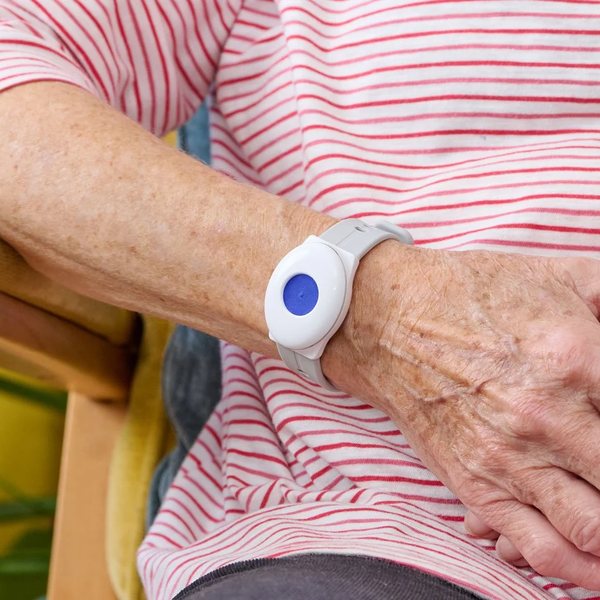
Best for living alone
Taking Care Digital Fall Alarm: see it at Taking Care (opens in a new tab)
About £70 to £85 set-up, then about £28 to £35 a month
- Type
- Monitored pendant
- Who answers
- UK 24-hour response team
- Fall detection
- Yes
- Needs
- No landline (uses mobile SIM)
Picture: Taking Care
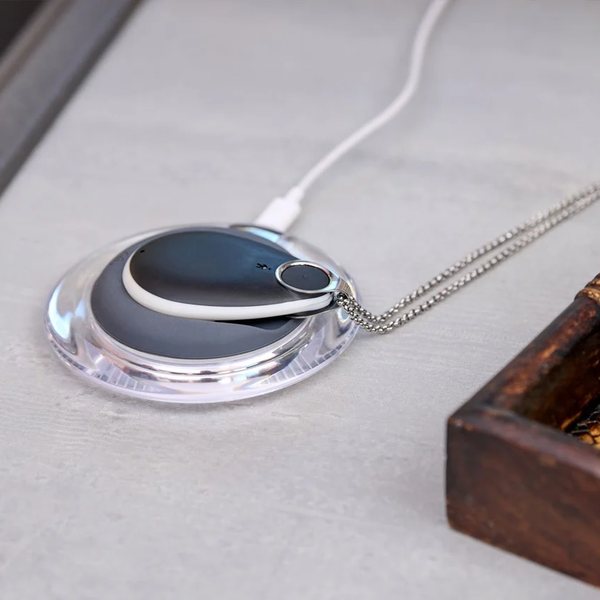
Best for outdoors
Taking Care Anywhere GPS alarm: see it at Taking Care (opens in a new tab)
About £70 to £85 set-up, then about £31 to £38 a month
- Type
- Monitored GPS pendant
- Who answers
- Monitoring service
- Fall detection
- Yes
- Needs
- Mobile signal
Picture: Taking Care
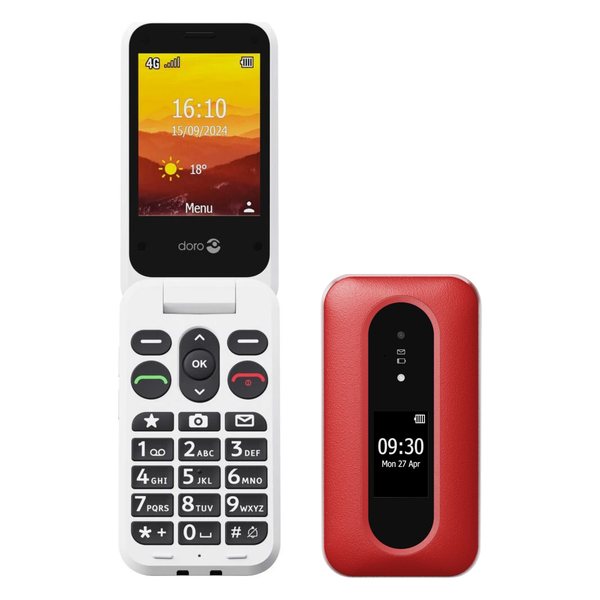
Family-call option
Doro Leva L30: see it on Amazon (affiliate link, opens in a new tab)
About £100 to £120
- Type
- Flip phone with help button
- Who answers
- Trusted contacts you choose
- Fall detection
- Not stated
- Needs
- Family who will answer
Affiliate link
Picture: Doro
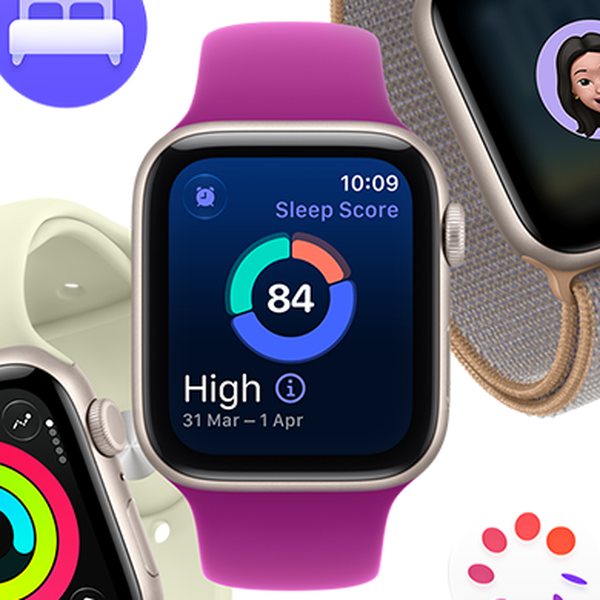
Smartwatch option
Apple Watch SE: see it on Amazon (affiliate link, opens in a new tab)
About £215 to £220
- Type
- Smartwatch
- Who answers
- Emergency services and contacts
- Fall detection
- Yes, on by default at 55+
- Needs
- iPhone; cellular watch or Wi-Fi
Affiliate link
Picture: Apple
Monitored alarm with fall detection: Taking Care Digital Fall Alarm
Taking Care Digital Fall Alarm (opens in a new tab) is a pendant worn on the neck or wrist. It works in the home and garden, up to about 300 metres from the base unit. It raises an alert after a hard fall, or when pressed. Calls go to a UK 24-hour response team. It uses a mobile SIM, so it needs no landline. Age UK sells the same service. Set-up is about £70 (£84 with VAT), then about £28.50 a month (£34 with VAT).
This is our first choice for someone living alone.
Monitored alarm for outdoors: Taking Care Anywhere
Taking Care Anywhere (opens in a new tab) is a GPS pendant with fall detection, a speaker and microphone. It works across the UK wherever there is a mobile signal, so suits someone who still goes out alone. Set-up is about £70 (£84 with VAT), then about £31.50 a month (£38 with VAT).
Phone with a help button: Doro Leva L30
Doro Leva L30 (opens in a new tab) (affiliate link) is a simple flip phone with an emergency assistance button. Doro says the button alerts trusted contacts you have chosen and can share your GPS location. There is no monitoring centre, so it relies on family. Doro gives it a hearing aid compatibility rating, but suggests checking it works with your own hearing aids. It costs about £115 for the handset.
Smartwatch with fall detection: Apple Watch SE
Apple Watch SE (opens in a new tab) (affiliate link) has fall detection, which Apple turns on automatically for users aged 55 and over. After a hard fall, if the wearer does not move for about a minute, it starts a 30-second countdown and then calls emergency services and alerts emergency contacts. It needs an iPhone, and a mobile (cellular) watch, a nearby iPhone or Wi-Fi calling to make the call. It suits someone already comfortable with an iPhone. It is not a substitute for a monitored service for a frail person. The current Apple Watch SE 3 costs about £215 to £220 for the 40mm GPS model; mobile models cost more. See also smartwatches for heart health.
Also worth considering
- A key safe outside the door lets responders get in if the person cannot reach the door. Monitored services usually ask for one or a nearby keyholder.
- Keeping a mobile phone charged and within reach, especially at night.
When to get help
- Call 999 if someone has fallen and may have hurt their head, neck, back or hip, or cannot get up. Do not try to lift them yourself.
- Call NHS 111 or use NHS 111 online if they have fallen and may be in pain, hurt or unwell, but it is not a 999 situation.
- Contact the GP practice after any fall, or if you are worried about their balance. The GP can arrange a falls assessment.
- Contact the council’s adult social services to ask about alarms, equipment and a care needs assessment.