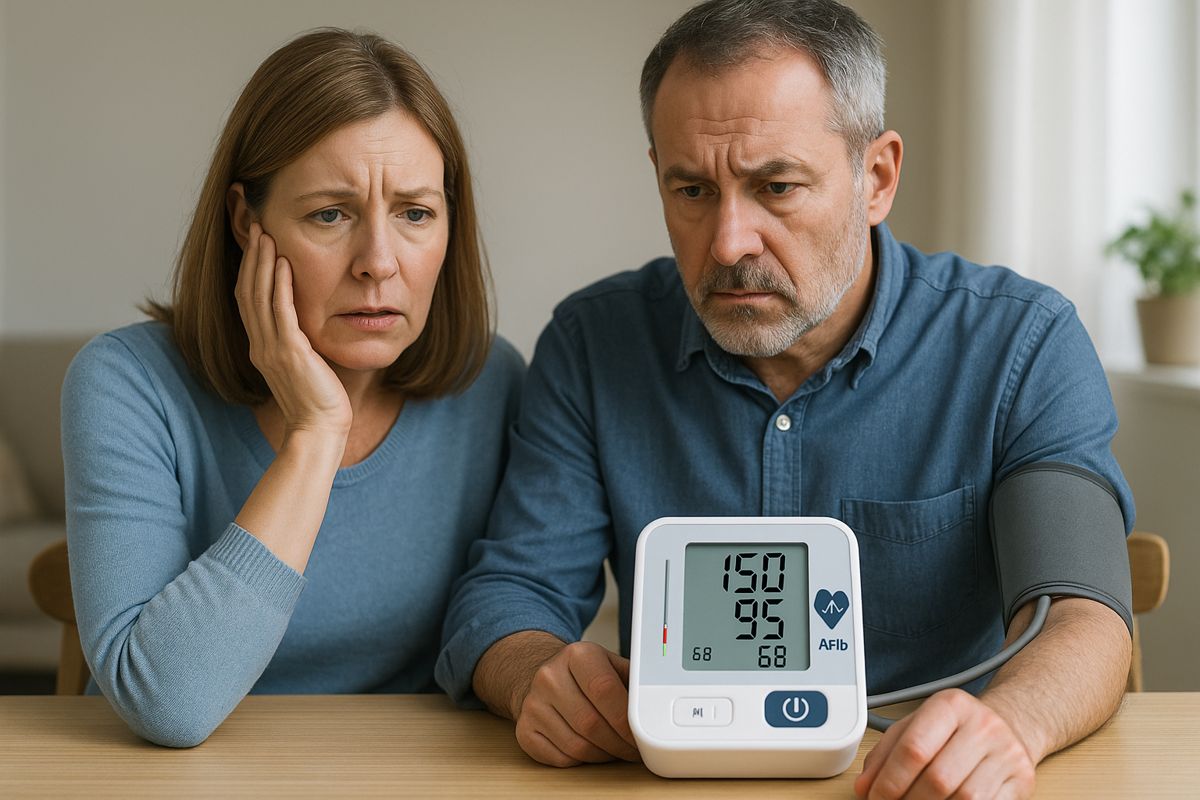
If you want a wearable that can flag a possible irregular heart rhythm, choose one whose ECG and irregular rhythm features are switched on in the UK. Apple, Samsung, Google (Fitbit and Pixel Watch) and Withings all offer these here. Pick the one that works with your phone. A watch can prompt you to get checked, but it cannot diagnose anything, and it is not a reason to skip GP checks. If you already have a heart condition, ask your GP or heart team before buying.
For what to do when a watch alerts you, see what smartwatch heart alerts mean.
The features explained
Irregular rhythm notifications. The watch checks your pulse in the background with a light sensor. If it keeps seeing an irregular pattern, it tells you it may be atrial fibrillation (AF). Checks are not continuous, so they can miss AF.
ECG app. You rest a finger on the watch for about 30 seconds. It records a single-lead ECG and labels it, for example as a regular rhythm, possible AF or inconclusive. Most let you save a PDF to show your GP.
High and low heart rate alerts. These tell you when your heart rate is above or below a level. They are general alerts, not rhythm checks.
High blood pressure notifications. Some Apple Watch models can look for signs of long-term high blood pressure over 30 days. They do not measure blood pressure. Apple says the feature is not for people under 22, people already diagnosed with high blood pressure, or pregnant people. If you need to check your blood pressure, use an upper-arm cuff. See blood pressure monitors.
Blood oxygen. Watch oxygen readings are not medical tests. Apple says its Blood Oxygen app is for wellness only, and Withings lists its watch reading in the UK as recreational grade. If a clinician has asked you to check your oxygen, use a proper pulse oximeter.
What “medical device” means here
Some heart features are regulated as medical devices, but the watch as a whole usually is not. Makers describe this differently:
- Withings says ScanWatch 2 is a Class IIa medical device, CE marked under the EU Medical Device Regulation, as an aid to diagnosing AF.
- Apple lists the UK as a country where its ECG app, irregular rhythm notifications and hypertension notifications are available.
- Samsung lists the UK for its ECG app, irregular rhythm notifications and blood pressure app, which run through the Samsung Health Monitor app. Samsung says none of these should be used to diagnose anything.
- Google (Fitbit and Pixel Watch) lists the UK as a country where its ECG app works.
Apple, Samsung and Withings say their ECG apps cannot detect a heart attack, and Samsung and Withings say not to use theirs if you have a pacemaker or implanted defibrillator. The rhythm features are not designed for people under 22.
Buy a UK model from a UK seller. Samsung says its heart apps only work on watches and phones bought in a country where the service is offered.
Options
Checked on the makers’ own pages on 25 October 2026 (Google Pixel Watch 4 on 28 October 2026). Prices change often.
Long battery, medical focus
Withings ScanWatch 2: see it on Amazon (affiliate link, opens in a new tab)
About £300 to £350
- Works with
- iPhone and Android
- ECG
- Yes
- Irregular rhythm alerts
- Yes
- Battery (maker's figure)
- Up to 35 days
Affiliate link
Picture: Withings
Best for iPhone users
Apple Watch Series 12: see it on Amazon (affiliate link, opens in a new tab)
From about £370
- Works with
- iPhone 11 or later only
- ECG
- Yes
- Irregular rhythm alerts
- Yes
- Battery (maker's figure)
- Up to 24 hours
Affiliate link
Picture: Apple
Best for Samsung phones
Samsung Galaxy Watch9: see it on Amazon (affiliate link, opens in a new tab)
About £380
- Works with
- Samsung Galaxy phones only
- ECG
- Yes, via Samsung Health Monitor
- Irregular rhythm alerts
- Yes, via Samsung Health Monitor
- Battery (maker's figure)
- Not stated
Affiliate link
Picture: Samsung

Best for other Android phones
Google Pixel Watch 4: see it on Amazon (affiliate link, opens in a new tab)
About £300 to £400
- Works with
- Android 11 or newer only
- ECG
- Yes
- Irregular rhythm alerts
- Yes (check UK availability)
- Battery (maker's figure)
- Up to 30 hours (41 mm) or 40 hours (45 mm)
Affiliate link
Low-cost pick
Fitbit Charge 6: see it on Amazon (affiliate link, opens in a new tab)
About £120 to £150
- Works with
- iPhone and Android
- ECG
- Yes
- Irregular rhythm alerts
- Check UK availability
- Battery (maker's figure)
- Up to 7 days
Affiliate link
Picture: Google Fitbit
Watch-free option
AliveCor KardiaMobile: see it on Amazon (affiliate link, opens in a new tab)
About £90 to £100
- Works with
- iPhone and Android
- ECG
- Yes, on demand
- Irregular rhythm alerts
- No
- Battery (maker's figure)
- Not stated
Affiliate link
Picture: AliveCor
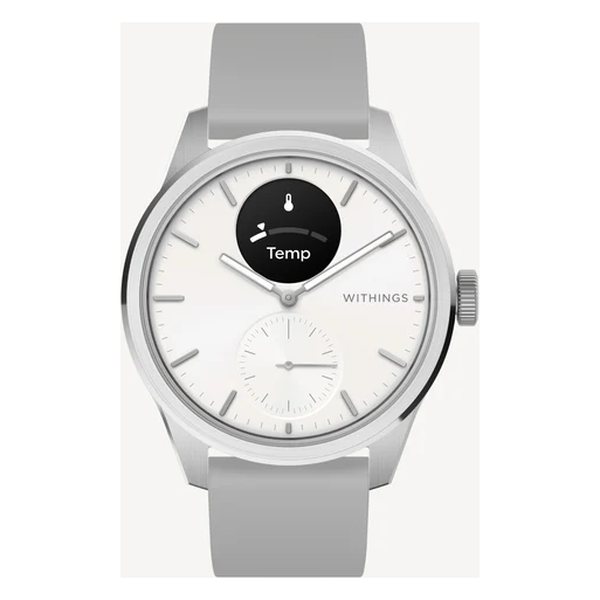
Best for a medical focus and long battery: Withings ScanWatch 2
Withings ScanWatch 2 (opens in a new tab) (affiliate link) looks like a traditional watch with hands. Withings lists ECG with AF detection, AF notifications and high or low resting heart rate alerts as available in the UK. It works with iPhone and Android. Withings states it is a Class IIa CE-marked medical device. The battery lasts up to 35 days, which suits people who will not charge a watch every night.
Not for: people who want lots of apps on their wrist, or people with a pacemaker or implanted defibrillator.
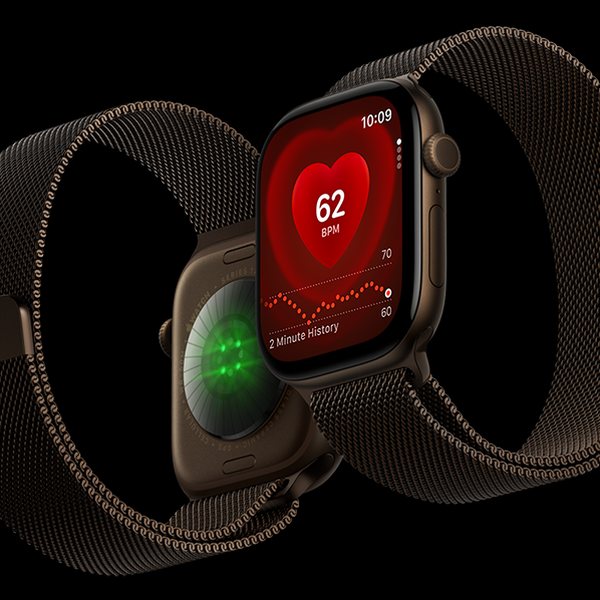
Best for iPhone users: Apple Watch Series 12
Apple Watch Series 12 (opens in a new tab) (affiliate link) is Apple’s current main model. It has an ECG app, irregular rhythm notifications, high and low heart rate alerts and hypertension notifications. Apple’s list shows hypertension notifications as available in the UK, with no exception for Series 12 here. You can export an ECG as a PDF for your GP. It needs an iPhone 11 or later. The cheaper Apple Watch SE has no ECG app and no hypertension notifications.
Not for: Android phone users. It only works with an iPhone.
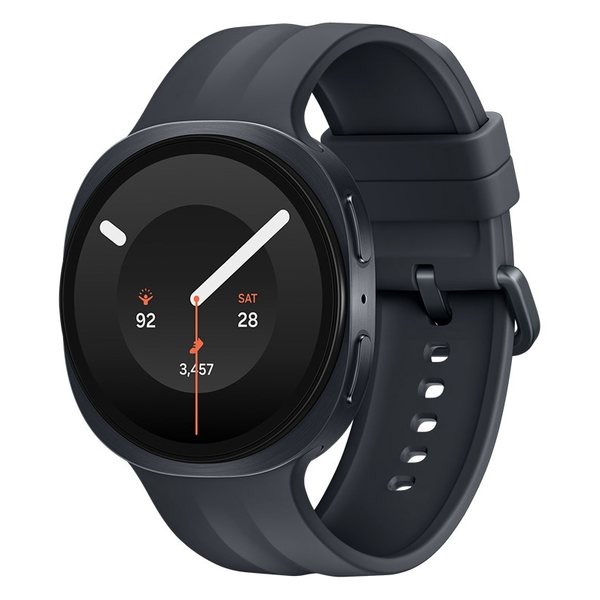
Best for Samsung phone users: Samsung Galaxy Watch9
Samsung Galaxy Watch9 (opens in a new tab) (affiliate link) is Samsung’s current main model. Samsung’s ECG and irregular rhythm features work on Galaxy Watch4 or later through the Samsung Health Monitor app. Samsung’s Health Monitor page does not yet name the Watch9, so check it is supported when you buy. The app can also estimate blood pressure after you calibrate it with a cuff monitor. Samsung says the blood pressure feature is not for diagnosis, and lists many conditions where you should not use it, including arrhythmia, diabetes and taking blood thinners.
Not for: iPhone or non-Samsung Android users. Samsung’s heart apps need a Samsung Galaxy phone.
Best for other Android phones: Google Pixel Watch 4
Google Pixel Watch 4 (opens in a new tab) (affiliate link) is Google’s current main watch in the UK, where Google sells it from about £349. It runs Google’s ECG app, which Google lists as available in the UK on Pixel Watch models, and offers irregular rhythm notifications. As with the Fitbit, Google’s help pages do not list the countries for irregular rhythm notifications, so check before you rely on them. It works with most Android phones running Android 11 or newer, and needs a Google Account. Battery life is up to 30 hours on the 41 mm model and up to 40 hours on the 45 mm model.
Not for: iPhone users. Google says iPhones are not supported.
Low-cost pick: Fitbit Charge 6
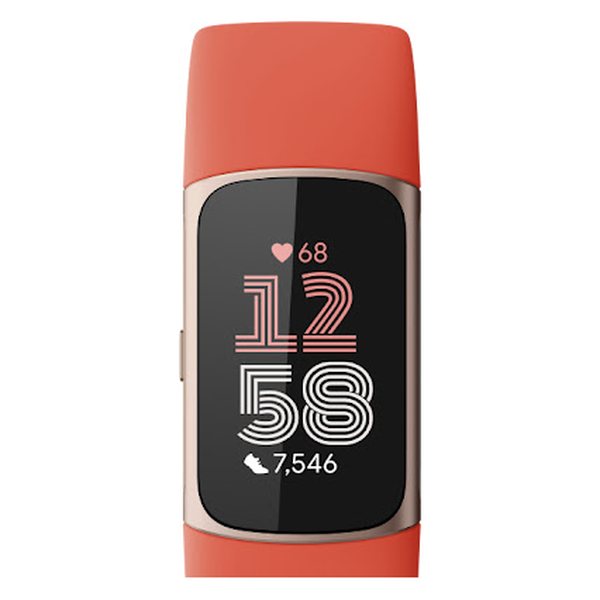
Fitbit Charge 6 (opens in a new tab) (affiliate link) is a slim fitness band rather than a full smartwatch. Google lists the UK for its ECG app on the Charge 6. Google says the band also offers irregular rhythm notifications and high and low heart rate alerts, but its help page does not list the countries for irregular rhythm notifications, so check before you rely on them. It works with most iPhones and Android phones and needs a Google Account. Battery life is up to 7 days.
Not for: people who struggle with small screens. The display is narrow.
No watch at all: KardiaMobile
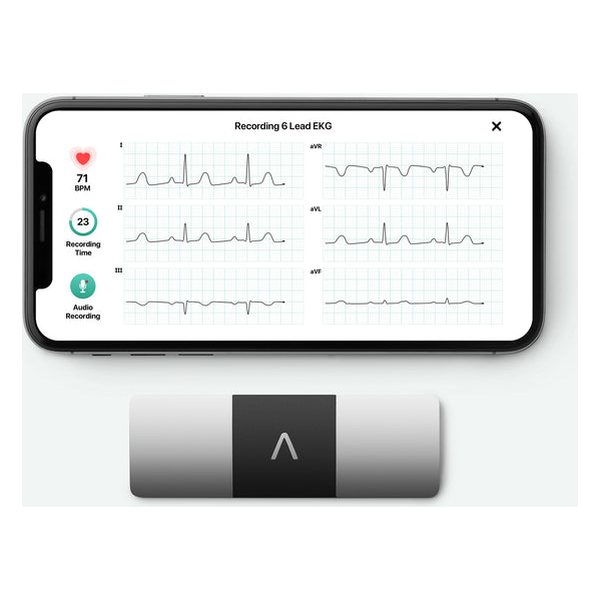
AliveCor KardiaMobile (opens in a new tab) (affiliate link) is a small pad you hold with your fingers to record an ECG on your phone. AliveCor says it can flag AF, a slow heart rate and a fast heart rate. It does not check in the background, so it only records when you use it. A six-lead version, KardiaMobile 6L, costs about £150. An optional paid membership adds extra features.
Not for: people who want automatic alerts. You have to remember to take a reading.
Other watches you may see
These came up on older versions of this page. We have not picked them because we could not confirm their heart features work in the UK.
- Huawei Watch D2. It has a small inflatable cuff in the strap, so it can take a wrist blood pressure reading, and Huawei describes ECG features. Huawei’s UK site says its health features are only available in selected European markets and that ECG only works where the service is offered, but does not confirm which work in the UK. It was not on the BIHS list of monitors validated for home use when last checked, so for blood pressure use an upper-arm cuff monitor instead.
- Garmin watches. Garmin’s ECG app can flag signs of AF on some models. Garmin announced it for the European Union and Australia in January 2025, but its pages do not confirm the UK. Garmin watches are mainly built for fitness training.
Remember your blood pressure
A watch is not a substitute for a proper blood pressure check. The NHS says to get your blood pressure checked if you are 40 or over and have not had it checked for more than 5 years. The British Heart Foundation says healthy adults aged 40 to 74 should be checked every 5 years. Many pharmacies in England offer this free. See checking your blood pressure at home.
Who might find one useful
- People who get palpitations now and then and want to record what their heart is doing at the time.
- People whose GP has asked them to look out for an irregular rhythm.
Who should not rely on one
- Anyone with symptoms now. Chest pain, fainting or breathlessness need medical help, not a watch reading.
- People under 22. The rhythm features are not designed for them.
- People with a pacemaker or implanted defibrillator, or a known rhythm problem other than AF. Ask your heart team first.
- People already diagnosed with AF. Apple’s notification feature is not meant for you, though some makers offer AF tracking instead.
- People who find constant monitoring makes them anxious. The British Heart Foundation says some people are better off having checks at their GP practice or pharmacy.
When to get help
Call 999 or go to A&E if you have palpitations that do not go away, or a fast or irregular heartbeat with chest pain, shortness of breath, fainting or dizziness, or weakness on one side, confusion or difficulty speaking.
Ask for an urgent GP appointment, call 111 or use NHS 111 online if you had these symptoms but they have stopped.
Contact your GP practice if a watch flags possible AF or high blood pressure, or if palpitations keep coming back.