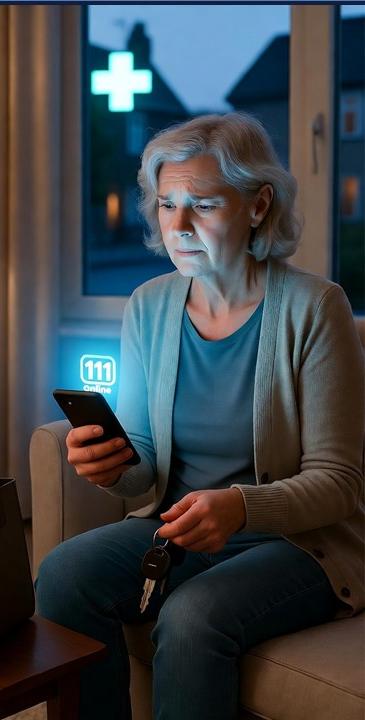
If you have completely run out of a medicine you take regularly, and you cannot wait for your next repeat prescription, you have two main options. In England, use the NHS 111 online emergency prescription service, which can send your request to a local pharmacy. Or go straight to a pharmacy and ask the pharmacist for an emergency supply.
This page is about medicines you already take. If you have a new symptom or a new problem, use NHS 111 online or call 111 instead. For some common infections a pharmacy can help directly: see Pharmacy First below.
Which option to use
| Your situation | Best first step |
|---|---|
| You have run out of a repeat medicine and your GP practice can’t help in time | 111 online emergency prescription service |
| You can get to a pharmacy now and have your old packet or repeat slip | Ask the pharmacist for an emergency supply |
| You have run out and you also feel unwell | Call 111 and speak to an adviser |
| You have run out of a controlled drug, such as morphine | Call 111 or your GP practice |
| You need a medicine that is not on repeat | Call 111, or see if Pharmacy First covers it |
| Someone is seriously ill | Call 999 |
How to get an emergency prescription from NHS 111 online
The 111 online emergency prescription service is for people in England who have completely run out of a medicine on repeat prescription. You can use it for anyone, of any age.
- Go to 111 online: emergency prescriptions. In the NHS App, select Prescriptions, where there is an option to request an emergency prescription.
- Choose “Start now”. It first checks that you do not need urgent medical help.
- Answer the questions. It asks where you are and when you are due to take your medicine, so it can suggest the best option nearby.
- If a supply is suitable, 111 sends a request to a nearby pharmacy and tells you where to go.
- Go to the pharmacy. The pharmacist makes the final decision about what to give you.
Do not use the online service:
- for antibiotics for a new or recent problem
- for controlled drugs that need ID to collect
- if you also have symptoms (call 111 instead)
What it costs
If 111 sends you to a pharmacy, you pay your usual prescription charge. If you normally get free prescriptions, it is free. In England the charge is £9.90 per item for 2026 to 2027. See prescription costs and free prescriptions.
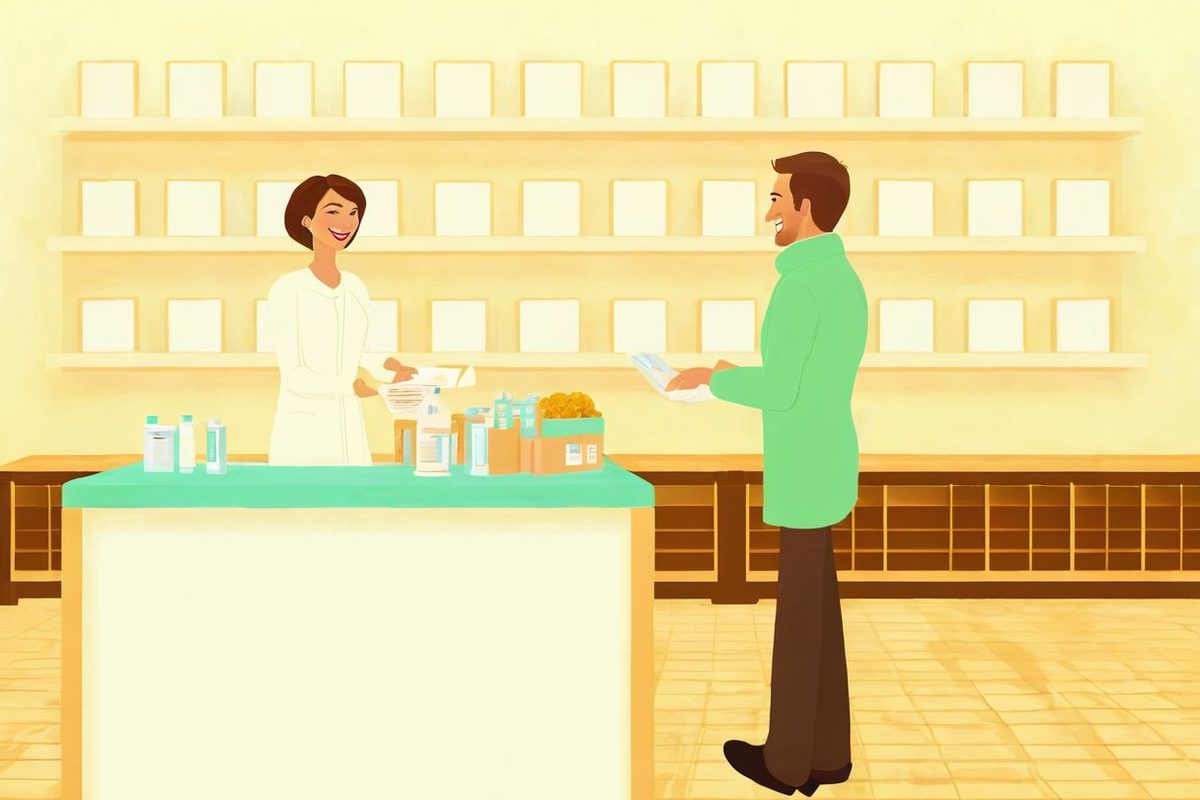
How to ask a pharmacy for an emergency supply
You can walk into any pharmacy and ask. A pharmacist can supply certain prescription medicines without a prescription if you need them urgently. The next section explains how to find one that is open.
- Take proof of your medicine if you can: an empty packet, a repeat slip or an old prescription. You can also show your prescriptions in the NHS App.
- Tell the pharmacist what you take, the dose, and who prescribes it.
- The pharmacist checks that you need it now and that it is safe to give.
The pharmacist decides how much to give. This can be up to 30 days for most medicines. For some items you may only get the smallest pack, such as one inhaler.
What it may cost
If you go to a pharmacy directly, without being sent by 111, it is not an NHS service. You may have to pay, and charges vary between pharmacies. This can apply even if your prescriptions are normally free, so ask about the cost first. Being referred through 111 means you pay only your usual prescription charge, or nothing if you get free prescriptions.
Finding an open pharmacy
Opening hours matter most in the evening, at weekends and on bank holidays. Try these, in this order:
- Search a map for pharmacies open now. On a phone, these links show pharmacies near you that the map thinks are open: - Google Maps: pharmacies open now - Apple Maps (iPhone): pharmacies open now
- Check on the NHS website. The NHS pharmacy finder lists pharmacies near a postcode, with their opening times.
- Phone before you set off. Map and website times are not always up to date, especially on bank holidays. A quick call also lets you check they have your medicine in stock.
Some tips:
- Some pharmacies stay open late. Pharmacies with long contracted hours must keep their evening opening, Monday to Saturday, and their Sunday hours. Larger pharmacies, such as those in big supermarkets, are worth checking first.
- Bank holidays work on a rota. Pharmacies do not have to open on bank holidays, so local NHS organisations arrange for some to open in turn. NHS 111 knows which pharmacies are open, so 111 online can point you to one.
- If nothing nearby is open, use 111 online or call 111. They can look further afield or arrange another way to get your medicine.
If your medicine is not on repeat: Pharmacy First
If you need a medicine you do not already have on repeat, you can call 111 or use 111 online to discuss your options.
For seven common conditions, you can also go straight to a pharmacy in England. Under the NHS Pharmacy First service, the pharmacist can assess you and, if needed, give some prescription medicines without a GP appointment. You can walk in, or be referred by 111 or your GP practice. It is best to contact the pharmacy before you visit.
| Condition | Who it covers |
|---|---|
| Earache (ear infection) | Children aged 1 to 17 |
| Impetigo | Age 1 and over |
| Infected insect bites | Age 1 and over |
| Sore throat | Age 5 and over |
| Sinusitis | Age 12 and over |
| Urinary tract infections (UTIs) | Women aged 16 to 64 |
| Shingles | Age 18 and over |
Online-only pharmacies do not offer the earache consultation. Outside these age ranges a pharmacist can still advise you, but you may need to see your GP for treatment. For more on choosing the right service, see which NHS service should I use?
Controlled drugs
Controlled drugs have stricter rules. Many, including morphine, cannot be given as an emergency supply without a prescription. The exception is phenobarbital for epilepsy, which a pharmacist can supply for up to 5 days. The 111 online service cannot be used for controlled drugs that need ID to collect.
If you have run out of a controlled drug, call 111 or your GP practice. They can arrange for a prescriber to assess you. Never borrow someone else’s medicine.
Other places that can help
- Your GP practice: call them first if they are open. When they are closed, the answerphone usually gives the out-of-hours number.
- An urgent treatment centre: you may be given your medicine after you have been seen.
- A&E: only if it is an emergency.
Toothache and dental problems
GP practices cannot treat dental problems, and the emergency prescription service is not for new dental pain.
- Call your dentist first. If they are closed, the answerphone may tell you what to do.
- If you have no dentist, or cannot get an urgent appointment, use 111 online or call 111. They can direct you to an urgent dental service.
- Ask a pharmacist about painkillers, such as paracetamol or ibuprofen, while you wait.
Can an emergency dentist give you antibiotics? A dentist treats the cause first, for example by draining an abscess. You may also be given antibiotics after treatment if the dentist thinks you need them.
Away from home
You can use 111 online or any pharmacy anywhere in England. Take your empty packet or a photo of your repeat slip. The map links above work wherever you are.
If you live in Scotland, Wales or Northern Ireland
Prescriptions are free in all three nations: see prescription costs.
- Wales: pharmacies that run the NHS Emergency Medicines Supply service can give a free supply when your GP practice is closed. Go in person with proof of your medicine, and phone first to check they offer it and have your medicine. Other pharmacies may charge. Call 111 Wales if you need more help.
- Scotland: call NHS 24 on 111.
- Northern Ireland: ask a pharmacist. The GP out-of-hours service is not for repeat prescriptions.
What NHS 111 online is
NHS 111 online is the NHS website for urgent health problems in England. It is at 111.nhs.uk and in the NHS App. It does not diagnose you. It asks questions and points you to the right place for help, such as a pharmacy, an urgent treatment centre, a nurse call-back or A&E. You can also use it for dental, mental health and sexual health help.
If you phone 111 instead, a trained adviser asks you questions from the same system that 111 online uses, so you are assessed in the same way.
111 online is for people aged 5 and over, except the emergency prescription service, which works for any age. Call 111 instead for a child under 5, or if you have a complex condition, a care plan or need end-of-life care.
Calling 111 is free and open 24 hours a day. If you have a hearing problem, call 18001 111 using Relay UK. British Sign Language users can use SignVideo for NHS 111. If you need another language, call 111 and ask for an interpreter.
Plan ahead so it doesn’t happen again
- Order repeat prescriptions in good time: up to 5 working days before you need them, and earlier before bank holidays. You can order repeat prescriptions online.
- Keep a note or photo of your medicines and doses.
- Ask your pharmacist whether any of your medicines are risky to stop suddenly.
Before a holiday
- Order enough well before you travel, with extra in case of delays.
- Keep medicines in their labelled pharmacy packs, in your hand luggage.
- Carry a copy of your prescription or a letter from your prescriber.
- Check the rules of the country you are visiting.
- If you take a controlled drug, carry a letter from your prescriber. A licence may be needed if you are taking more than 3 months’ supply.
When to get help
- Call 999 if someone has chest pain, severe breathing problems, a seizure that won’t stop, or is unconscious. Also call 999 or go to A&E for serious swelling of the mouth or face that makes it hard to breathe, speak or swallow.
- Call 111 if you have run out and feel unwell, have missed doses of an important medicine such as insulin or epilepsy medicine, or have run out of a controlled drug.
- Contact your GP practice to restart your repeat prescription after any emergency supply.
- Ask a pharmacist if you are unsure whether it is safe to miss a dose.