If you are off sick for 7 days or less, you do not need a fit note. You confirm you were ill to your employer yourself, which is called self-certifying. If you are off for more than 7 days in a row, counting weekends and bank holidays, ask a healthcare professional involved in your care for a fit note. The easiest way is usually your GP surgery’s website or online form, or the NHS App if your surgery offers it.
A fit note is the official name for what most people still call a sick note. It is also called a “statement of fitness for work”.
Do you need a fit note?
| How long you have been ill | What you need |
|---|---|
| 7 days or less | No fit note. Self-certify with your employer |
| More than 7 days in a row | A fit note from a healthcare professional |
Days you would not normally work still count. So if you fall ill on a Friday, the weekend is part of the 7 days.
Self-certifying for the first 7 days
Your employer can ask you to confirm you were off sick when you go back. You and your employer agree how, for example a form or an email. Check your contract or staff handbook for your employer’s own sickness process.
HMRC has a form called the SC2 (“employee’s statement of sickness”). You can use it to self-certify, or alongside a fit note, to ask your employer for Statutory Sick Pay. You fill it in online, and you cannot save your progress, so have these ready first:
- your National Insurance number
- the dates you were ill
- your last working day before you became ill
- your payroll or clock number, if you have one
Give the finished form to your employer and keep a copy.
If your employer wants a note for the first 7 days
A healthcare professional may charge a fee for a note covering the first 7 days. Your employer should pay this fee. A fit note is free if you have been ill for more than 7 days.
How to ask for a fit note
- Start with your GP surgery’s website. Most explain how to ask for a fit note. Many use an online form, sometimes listed as an “admin request”. The form often comes from a company such as eConsult or Accurx (Accurx’s form is often called Patient Triage): see what the online form might be called. If you are not sure of the website address, search for your surgery on the NHS Find a GP service.
- Use the NHS App, if your surgery offers it. Select Appointments, then Request a letter or information, and answer the questions. If you cannot see this option, your surgery does not offer it in the app, so contact them directly. See getting started with the NHS App.
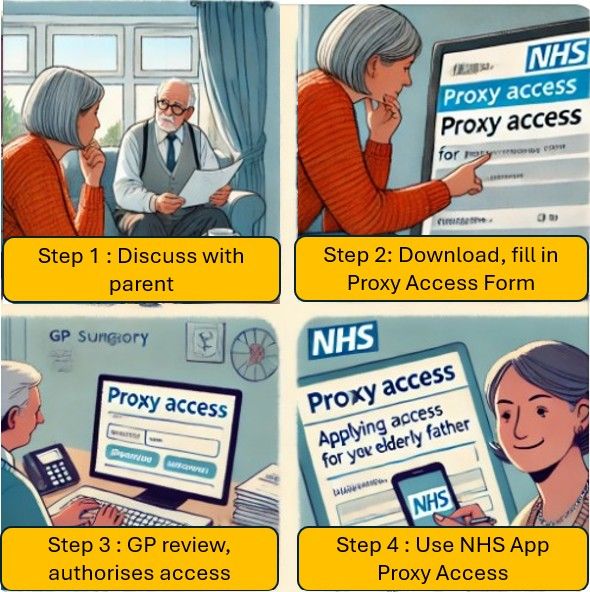
- Phone the surgery if you cannot use online services. You can also ask whether someone can request it on your behalf. Proxy access lets a carer or relative manage some things for you.
- Give the dates. Say when your illness started, why you are off work, and how long you expect to be off.
- Wait for a reply. The surgery may call you to talk it through before issuing the note.
NHS 111 cannot issue fit notes. You need to contact your GP surgery or the professional treating you.
This short NHS video shows how to ask your GP surgery for a letter, such as a fit note, in the NHS App (signed in British Sign Language):
 Play video: How to ask your GP surgery for a letter or information, from NHS
How to ask your GP surgery for a letter or information
Who can give you a fit note
Since July 2022, these professionals can issue fit notes:
- doctors, including GPs and hospital doctors
- nurses
- pharmacists working in GP surgeries, hospitals and clinics
- physiotherapists
- occupational therapists
Ask the professional who is involved in your care. If you have been in hospital, the clinician who discharges you should give you the fit note where possible, rather than sending you to your GP.
They do not always need to see you in person. They can assess you face to face, by phone, by video call, or by reading a report from another healthcare professional.
Digital fit notes
Fit notes now show the name and profession of the person who issued them, instead of an ink signature. This means your surgery can send yours by text, email or through an online system, where its IT allows. A fit note without the issuer’s name is not valid and may be rejected.
What the fit note says
The healthcare professional will tick one of these:
- Not fit for work: you should not work for the period shown.
- May be fit for work: you could work with some support. They may suggest a phased return, changed hours, different duties or changes to your workplace.
These suggestions are advice, not instructions. Talk them through with your employer. If your employer cannot make the changes, the note counts as “not fit for work”.
In the first 6 months of an illness, one fit note can cover up to 3 months.
Common questions
Will my employer accept an online or private fit note?
A fit note from your NHS GP surgery or hospital is valid whether it is printed or sent to you digitally. It must show the name and profession of the person who issued it.
Private doctors and clinics can give you a private medical certificate or report instead. Your employer can accept it in the same way as a fit note, but does not have to. If your employer asks whether a fit note is genuine, the professional who issued it can check its serial number and confirm it. They do not share any medical details when they do this.
Can a fit note be backdated?
Sometimes. The fit note always shows the date it was written. But it can cover an earlier period if the professional assessed you before that date, or if your illness affected you from an earlier date. The government guidance does not set a fixed limit, so ask the professional treating you.
Can my employer overrule my fit note?
The fit note is advice to you and your employer. If it says you “may be fit for work”, your employer does not have to make the changes suggested. If they cannot, the note counts as “not fit for work”. A fit note is enough evidence for Statutory Sick Pay.
You can go back to work before the note ends if you feel able to and your employer agrees.
How do I give my fit note to my employer?
Ask your employer how they want it. You can usually hand it in, post a copy, or email the digital version or a clear photo. Your employer can keep a copy, but the original fit note belongs to you, so keep it safe.
Can I get a fit note for court, travel or “fit to fly”?
No. A fit note can only cover your own health condition, for work, sick pay and benefits. For a letter for court, travel insurance or flying, ask your GP surgery directly. Some letters are not part of NHS care, so ask whether there is a fee before you request one.
Statutory Sick Pay
Statutory Sick Pay (SSP) is the minimum sick pay your employer must pay if you qualify. Your contract may give you more.
As shown on GOV.UK in October 2026:
- How much: £123.25 a week, or 80% of your normal weekly earnings if that is lower. Your employer works out your earnings as an average over 8 weeks.
- How long: up to 28 weeks.
- Who qualifies: you must be classed as an employee, have done some work for your employer, and have been off sick for at least one full working day. Agency workers may also qualify.
- Telling your employer: tell them by their deadline. If they have not set one, it is 7 days. Telling them late could mean you lose some SSP.
Changes from 6 April 2026:
- SSP is now paid from your first full day off sick. It used to start on the fourth day.
- There is no longer a minimum earnings level. Before, you had to earn at least £125 a week.
If you think your employer is wrong not to pay SSP, or is paying the wrong amount, ask them why first. If that does not sort it out, GOV.UK explains how to contact HMRC’s Statutory Payment Disputes Team. Rates can change each April, so check GOV.UK: Statutory Sick Pay for the latest figures.
Going back to work
You can go back as soon as you feel able, even before the end date on the note. Talk to your employer first. You do not need to see a healthcare professional again before you return.
Some jobs have extra health rules. For example, drivers of lorries and buses must meet DVLA rules.
Keep the original fit note. It belongs to you. Your employer can take a copy.
If you are disabled or have a long-term health condition, your employer has a duty under the Equality Act to make reasonable adjustments. GOV.UK: Access to Work can give extra support on top of this. For advice on returning to work or a problem at work, the GOV.UK fit note guidance points to Acas.
If you live in Scotland, Wales or Northern Ireland
The NHS App is for people with a GP in England. Wherever you live, your GP practice website will explain how to ask for a fit note. The sick pay rules above come from GOV.UK. If you work in Northern Ireland, check nidirect: Statutory Sick Pay, as some employment rules are set separately there.
When to get help
A fit note is about work. Your health comes first, so do not wait for paperwork if you are getting worse.
- Call 999 or go to A&E if you have signs of a medical emergency, such as chest pain, severe difficulty breathing, or signs of a stroke.
- Use NHS 111 online or call 111 if you need medical help urgently and your GP surgery is closed. Which NHS service should I use? explains the options.
- Contact your GP surgery if your illness is lasting longer than you expected, you are not getting better, or you need a fit note extended.
- Ask a pharmacist for advice on minor illnesses and medicines while you recover.