In England, you can choose whether your confidential health information is used for research and planning, as well as for your own care. The main choice is the National Data Opt-out, which you can set in the NHS App, online, by phone or by post. There is also a separate GP-level choice called a Type 1 opt-out. Neither choice affects the care you get, and you can change your mind at any time.
Two kinds of data use
Your health information is used in two broad ways:
- Your direct care. This is when the people treating you see your records, for example to refer you to hospital or send a prescription to a pharmacy. Opting out does not stop this.
- Research and planning. This is when information is used to plan services, check how well the NHS is working, or support medical research.
The opt-outs described here are about the second kind of use.
Why it matters
The NHS says information from health records helps to plan and improve health and care services, and to research and develop cures for serious illnesses. Researchers at universities and hospitals, and companies developing new treatments, can ask to use it. Sharing can help the NHS improve care for everyone and find new treatments.
But it is your information, and the choice is yours. Whatever you decide, it will not affect the care you get.
The National Data Opt-out
The National Data Opt-out lets you say you do not want your confidential patient information used for purposes beyond your care, such as research and planning, unless an exception applies.
It applies to health and adult social care provided in England. It covers publicly funded care only, not private treatment, and not care in Wales, Scotland or Northern Ireland.
What it does not cover
Your information can still be used, even if you opt out, when:
- the law requires it, for example a court order
- you have given consent for a particular use, such as joining a research study
- there is an overriding public interest, for example in an emergency or to control an infectious disease
- information that could identify you has been removed
- a specific exemption applies, such as official national statistics like the census
The opt-out also does not apply to systems that process data for your direct care, including the current NHS Federated Data Platform (see below).
How to set or change it
You must be 13 or over to set it for yourself. Choose whichever way suits you:
- NHS App. Log in and look for your data sharing or opt-out choice among your health choices. The app confirms who you are when you log in. See getting started with the NHS App.
- Online. Use the NHS Make your choice service. You need an email address or mobile phone, plus your NHS number or the postcode your GP surgery has for you.
- By phone. Call 0300 303 5678 (National Data Opt-out contact details). Staff can set your choice or post you a form.
- By post or email. Download the form from the Make your choice page and send it to the address on it.
Once registered, it can take up to 21 days for your choice to apply across all health and care organisations.
If you do not know your NHS number, look on a prescription, test result or hospital letter, or ask your GP surgery.
Setting it for someone else
- A child under 13: a parent or legal guardian can set a choice for them using the form.
- Another adult: you need a lasting power of attorney (for health and welfare, or for property and financial affairs) or to be their Court of Protection deputy. Use the separate form for this.
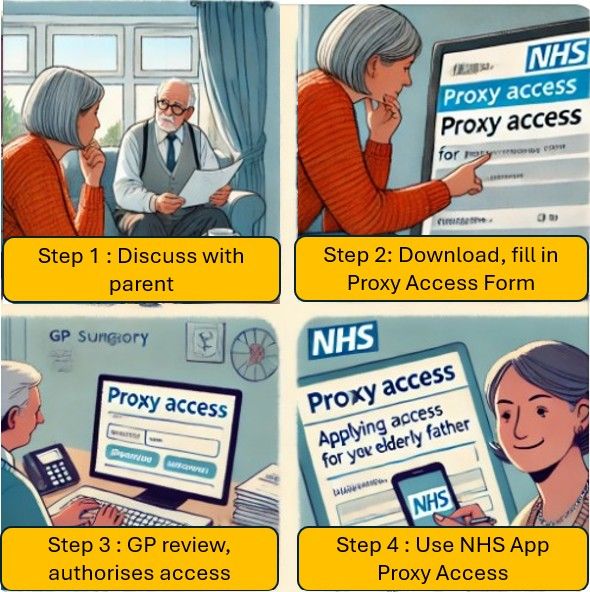
If you help someone with their NHS services, see proxy access and looking after an older parent at home.
Type 1 opt-out (your GP record)
A Type 1 opt-out tells your GP surgery not to share information from your GP record for research and planning.
- Only your GP surgery can record it. Download the form from the NHS website, or ask the surgery for one, and give it to them.
- It only covers your GP record. NHS England can still collect and share data from other services, such as hospitals. The National Data Opt-out is the choice that covers those.
- You can opt out or back in at any time.
You can set a Type 1 opt-out, the National Data Opt-out, both or neither. They are separate choices.
About GP data collection plans
Some readers will remember the “General Practice Data for Planning and Research” (GPDPR) plan from 2021. It was paused that year. NHS England Digital’s programme page (last edited June 2024) says there is no set start date. Collection will only begin once certain conditions are met, including that the British Medical Association, the Royal College of GPs and the National Data Guardian are satisfied. The page does not say the plan has been cancelled or replaced.
How the choices apply to some NHS data collections
The NHS collects information for many national programmes. The opt-outs do not work the same way for each one. Here are some you may hear about:
| Collection | What it is | What your choice does |
|---|---|---|
| General Practice Data for Planning and Research (GPDPR) | A planned collection of GP data for planning and research | Paused since 2021, with no set start date (see above) |
| NHS Federated Data Platform | Software that brings together information NHS organisations already hold (see below) | NHS England says neither opt-out applies to its current uses |
| Hospital Episode Statistics (HES) | NHS England’s national store of data about care in NHS hospitals in England | Collected whatever you choose. The National Data Opt-out is applied before NHS England releases information that could identify you for research or planning. It does not apply to anonymised data |
| Cancer and other disease registers (National Disease Registration Service) | Records of people diagnosed with cancer and some other conditions | The National Data Opt-out does not apply. To opt out, contact the service directly (see below) |
| National Child Measurement Programme | Height and weight checks for children at primary school, run by local councils | Parents get a letter before the checks and can withdraw their child |
Opting out of the disease registers
The National Disease Registration Service is not part of the National Data Opt-out. If you do not want to be included, you contact it directly with a copy of photo ID and proof of address. It then deletes your information and adds your NHS number to a list so you are not added again. See NHS England Digital: opting out of the national disease registers for the email address and details.
The NHS Federated Data Platform
The NHS Federated Data Platform (FDP) is software that brings together information already held in NHS computer systems, so staff can see it in one secure place. NHS England says it supports patient care, day-to-day running of services and planning.
Each NHS organisation that uses it controls its own data. The company that supplies the software can only act on NHS instructions.
NHS England says the National Data Opt-out and the Type 1 opt-out do not apply to the platform’s current uses. Its reasons are:
- local use is limited to the direct care of patients, which the opt-outs do not cover
- national use does not include confidential patient information that the opt-outs would cover
NHS England says that if the platform is later used for a purpose the opt-out does cover, your opt-out will be respected.
Your Summary Care Record
The Summary Care Record is a different thing. It is a short summary of your GP record, including your medicines and allergies, that health professionals treating you elsewhere can see. This is for your direct care, so the opt-outs above do not affect it.
You can choose to have:
- a Summary Care Record with additional information, such as significant medical history
- a record with core information only (medicines and allergies)
- no Summary Care Record at all
Tell your GP surgery, or fill in the patient preferences form and return it to them. Staff must ask your permission before looking at it, unless it is an emergency and you cannot answer.
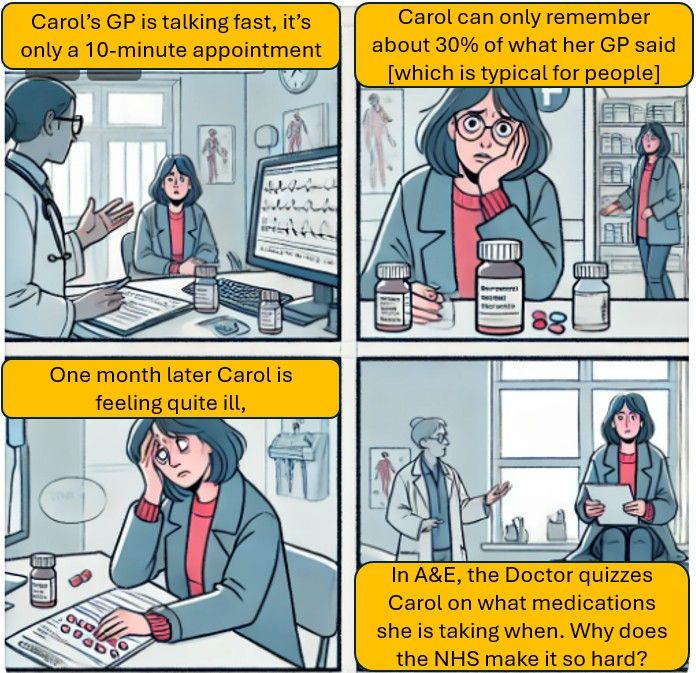
Think carefully before opting out. If you are taken ill away from home, it helps staff know which medicines you take.
Seeing your own record
You can see much of your GP record yourself in the NHS App. See viewing your GP record.
If you live in Scotland, Wales or Northern Ireland
The National Data Opt-out and Type 1 opt-out only cover care in England. The other nations have their own arrangements:
- Scotland: NHS inform explains how NHS Scotland uses your information, including your right to object.
- Northern Ireland: nidirect explains how Health and Social Care records are used and shared.
- Wales: ask your GP practice how your information is shared and what choices you have.
Where to read more
- NHS: Opt out of sharing your health records
- NHS: When your choice does not apply
- NHS England Digital: National Data Opt-out
When to get help
Data choices are not usually urgent. But do not let worries about records stop you getting care.
- Call 999 or go to A&E in a medical emergency. Your opt-out choices will not stop staff treating you.
- Use NHS 111 online or call 111 if you need urgent medical help and your GP surgery is closed.
- Contact your GP surgery to record a Type 1 opt-out, change your Summary Care Record choice, or ask how they share your record locally.
- Call the National Data Opt-out contact centre on 0300 303 5678 (contact details) if you cannot use the online service or need help setting a choice.