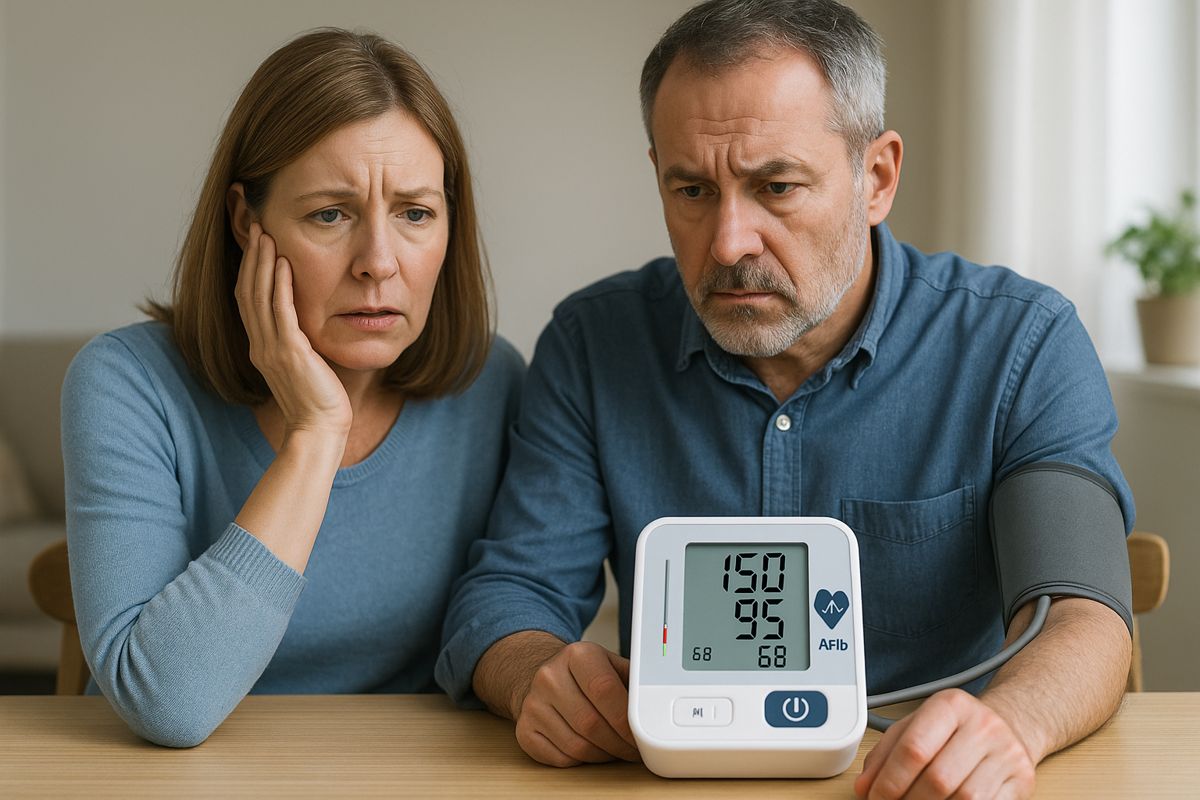
If your GP practice asks for home blood pressure readings, take two readings a minute apart, twice a day (morning and evening), for 7 days. Write every reading down. Then send the whole list to the practice in the way they asked for. Do not leave out high or low readings. If your practice gave you different instructions, follow theirs.
Why your GP practice wants home readings
Blood pressure is often higher at the surgery than at home, because people feel tense there. Home readings show what your blood pressure is like in everyday life. NICE, which writes guidance for the NHS, says home readings can be used to confirm high blood pressure. They can also show whether treatment is working.
What you need
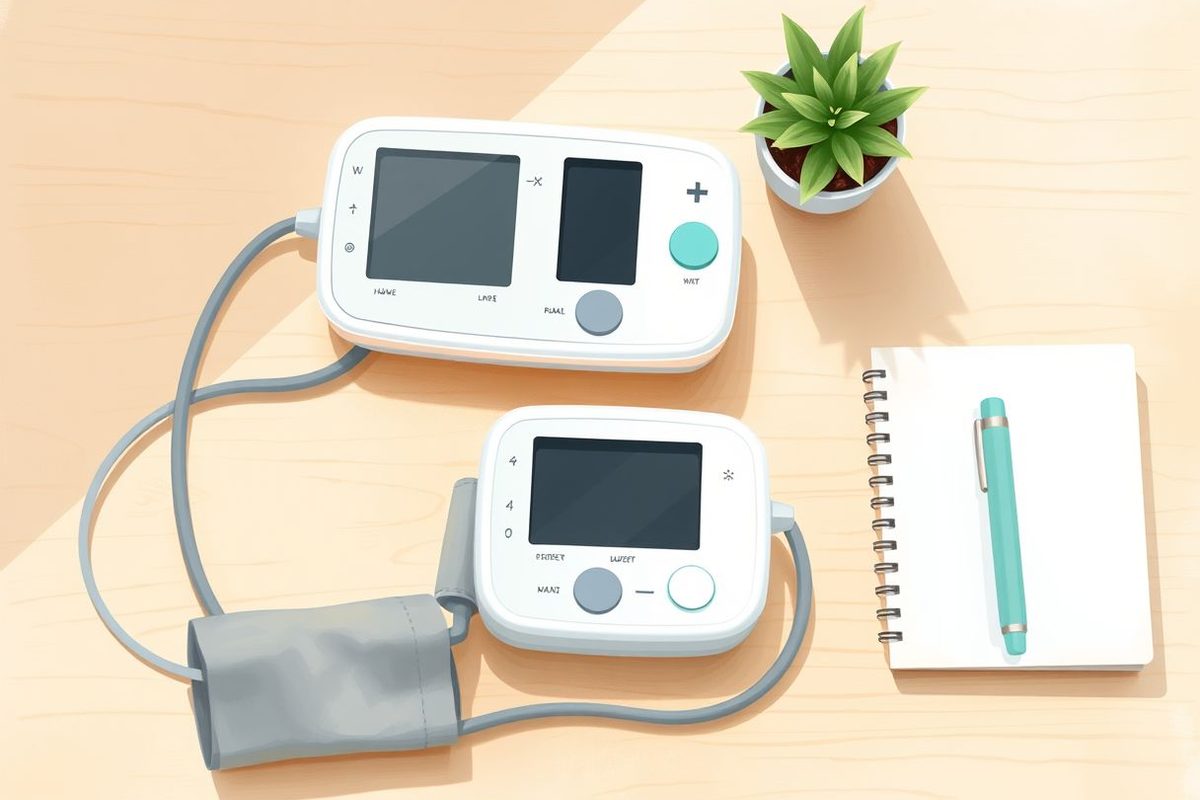
- A validated upper-arm monitor. Your practice may lend you one. If you are buying your own, see our guide to choosing a validated monitor.
- The right size cuff for your arm.
- A way to record readings: our printable one-week reading log (PDF), the log below, a notebook, or the British Heart Foundation’s printable diary.
How to do a week of readings
This follows the NICE guideline on high blood pressure (NG136) and the British Heart Foundation’s diary instructions.
- Plan 7 days. NICE says at least 4 days, ideally 7. Start on a day when you can manage both sessions.
- Morning session. The BHF suggests between 6am and midday. If you take blood pressure tablets, ask your practice whether to check before or after taking them.
- Evening session. The BHF suggests between 6pm and midnight.
- At each session, take 2 readings, at least 1 minute apart, sitting down. If the two are very different, take a third and write it down too.
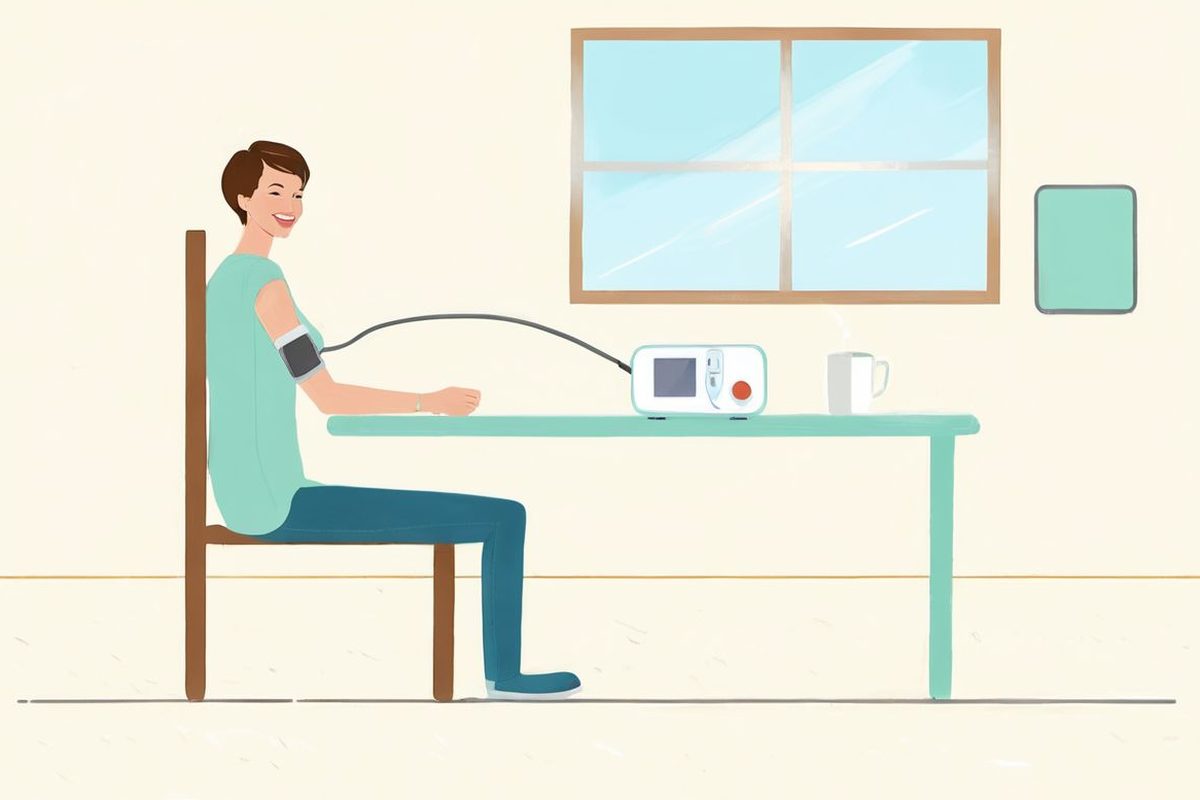
- Set up the same way each time. Sit with your back supported, feet flat and your arm resting on a table at heart height. Stay still and quiet. Our home blood pressure guide has the full steps.
- Write down every reading straight away. Include the top number, bottom number and pulse. Note anything unusual, such as feeling unwell, a bad night’s sleep or a missed tablet.
- Keep going even if a reading looks odd. Do not skip readings or repeat them until you get a number you like.
How the practice works out your average
NICE tells clinicians to ignore the readings from day 1 and average all the rest.
Your practice will usually do this sum for you, so you do not have to. If they ask you to work it out, here is how:
- Cross out day 1.
- Add up all the top numbers from day 2 onwards, then divide by how many readings there are.
- Do the same for the bottom numbers.
Example with 4 readings: top numbers 138, 134, 130 and 126 add up to 528. Divide by 4 to get 132. Bottom numbers 86, 84, 80 and 78 add up to 328. Divide by 4 to get 82. The average is 132/82.
For a home average, NICE uses 135/85 or above as the threshold for high blood pressure. Your GP or nurse will explain what your result means for you.
Reading log you can copy
You can also download the reading log as a one-page PDF to print.
Copy this table into a notebook, or print this page. Each row is one session.
| Day | Date | Time | Reading 1 (top/bottom) | Reading 2 (top/bottom) | Pulse | Notes |
|---|---|---|---|---|---|---|
| 1 | Morning | / | / | |||
| 1 | Evening | / | / | |||
| 2 | Morning | / | / | |||
| 2 | Evening | / | / | |||
| 3 | Morning | / | / | |||
| 3 | Evening | / | / | |||
| 4 | Morning | / | / | |||
| 4 | Evening | / | / | |||
| 5 | Morning | / | / | |||
| 5 | Evening | / | / | |||
| 6 | Morning | / | / | |||
| 6 | Evening | / | / | |||
| 7 | Morning | / | / | |||
| 7 | Evening | / | / |
Add your name, date of birth and the monitor’s make and model at the top. If your monitor shows an irregular heartbeat symbol, write “IHB” in the notes. See what that symbol means.
How to send your readings to the practice
Every practice does this differently, and every practice website is different. So check what yours asked for, or look on its website. Common options are:
- The practice’s online form. Practices usually have an online consultation form, or a contact form, on their website for non-urgent requests. The NHS says you may also be able to reach the form through the NHS App. Type your readings in, or attach a photo of your log if the form lets you.
- A text message link. Your practice may send you a text with a link for entering your readings. Only use links that come from your own practice.
- NHS App messages. Some practices let you send a message through the NHS App. Not all practices offer this. If you do not see the option, your practice does not provide it.
- On paper. Hand in your written log or a printed diary at reception. Ask them to add it to your record.
Whichever way you choose, include your full name and date of birth, every reading with its date and time, and any notes. If you are sending readings for someone you care for, check that the practice knows you are helping them.
When to get help
Do not wait for the end of the week if you feel unwell.
Call 999 if you have chest pain or discomfort that does not go away, or pain spreading to your arm, neck, jaw, stomach or back. Also call if you have chest pain with sweating, sickness, lightheadedness or breathlessness. Call 999 too for signs of a stroke: a drooping face, arm weakness, or slurred or confused speech. Do not drive yourself to A&E.
If a reading is very high, sit quietly for a few minutes and check again. NICE counts a clinic reading of 180/120 or higher as severe, and the BHF says to get urgent medical help if your blood pressure is dangerously high. If your reading stays at that level, or is much higher than usual for you, get advice the same day from your GP practice or NHS 111 (online or by phone). If you also feel unwell, confused or have chest pain, call 999.
Use NHS 111 (online or by phone) if you often get headaches or blurred vision, or chest pain that comes and goes.
Contact your GP practice if you keep feeling dizzy or faint, or your monitor keeps showing an irregular heartbeat symbol.
Ask a pharmacist if you are not sure how to use your monitor or whether your cuff fits.