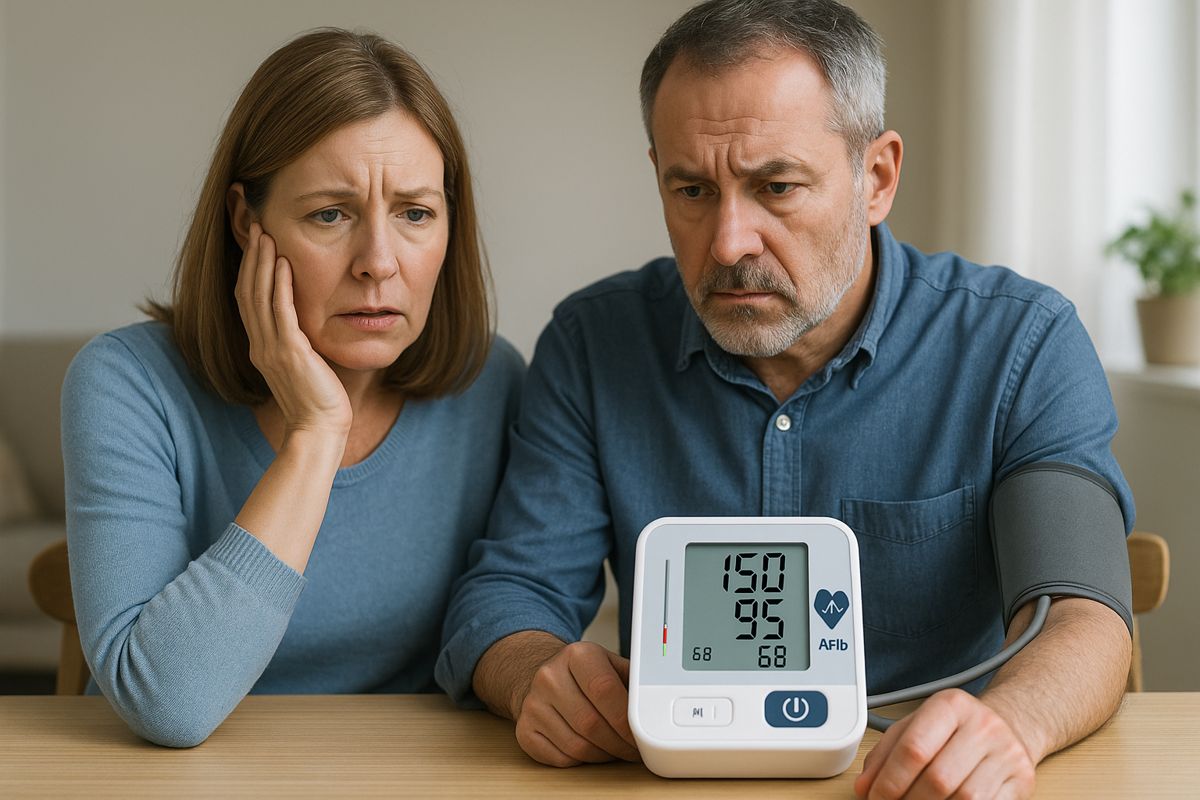
If your monitor shows an irregular heartbeat symbol, sit still for a few minutes and measure again. If it appears once and then goes away, it may have been caused by movement or talking. If it keeps appearing, book a routine GP appointment and take your readings with you. Call 999 straight away if you also have chest pain, breathlessness, fainting or signs of a stroke.
What the symbol means
While the cuff inflates and deflates, the monitor senses each beat of your pulse. If the gaps between beats are uneven, it shows a symbol. Different makes word it differently:
- “IHB” or a heart symbol usually means “irregular heartbeat”. The monitor noticed uneven beats during that reading.
- “AFib” or “AF” appears on some monitors that look for a pattern that could suggest atrial fibrillation.
Either way, the monitor is flagging something to check. It cannot diagnose a heart condition. Only a healthcare professional can do that, usually with an ECG (a heart tracing).
What atrial fibrillation (AF) is
Atrial fibrillation is a common heart rhythm problem where the heartbeat is not steady. It is often fast as well as irregular.
Some people feel a fluttering, pounding or racing heart, tiredness, breathlessness or dizziness. Some feel nothing at all. The NHS says AF is sometimes found at a routine check-up.
AF matters because it raises the risk of blood clots, stroke and heart failure. The BHF says AF is linked to a fivefold increase in stroke risk, even when it causes no symptoms. It can usually be managed, and treatment lowers the risk of these problems, so finding AF is worthwhile.
You may be more likely to have AF if you:
- are aged 55 or over, or are a man
- have high blood pressure, heart failure, or have had a heart attack
- have an overactive thyroid, diabetes, chronic kidney disease or sleep apnoea
- smoke or are overweight
The BHF says AF can also be triggered by things such as alcohol, caffeine and emotional stress.
Common reasons for a one-off alert
An irregular reading does not always mean AF. A flag is more likely if:
- you moved, talked or laughed during the reading
- the cuff was loose or in the wrong place
- you had just been active, or had caffeine, alcohol or nicotine
- you felt stressed or anxious
- you had occasional extra or skipped beats (called ectopic beats). The NHS says palpitations like these are usually harmless.
How to repeat the reading
- Rest for a few minutes, sitting quietly.
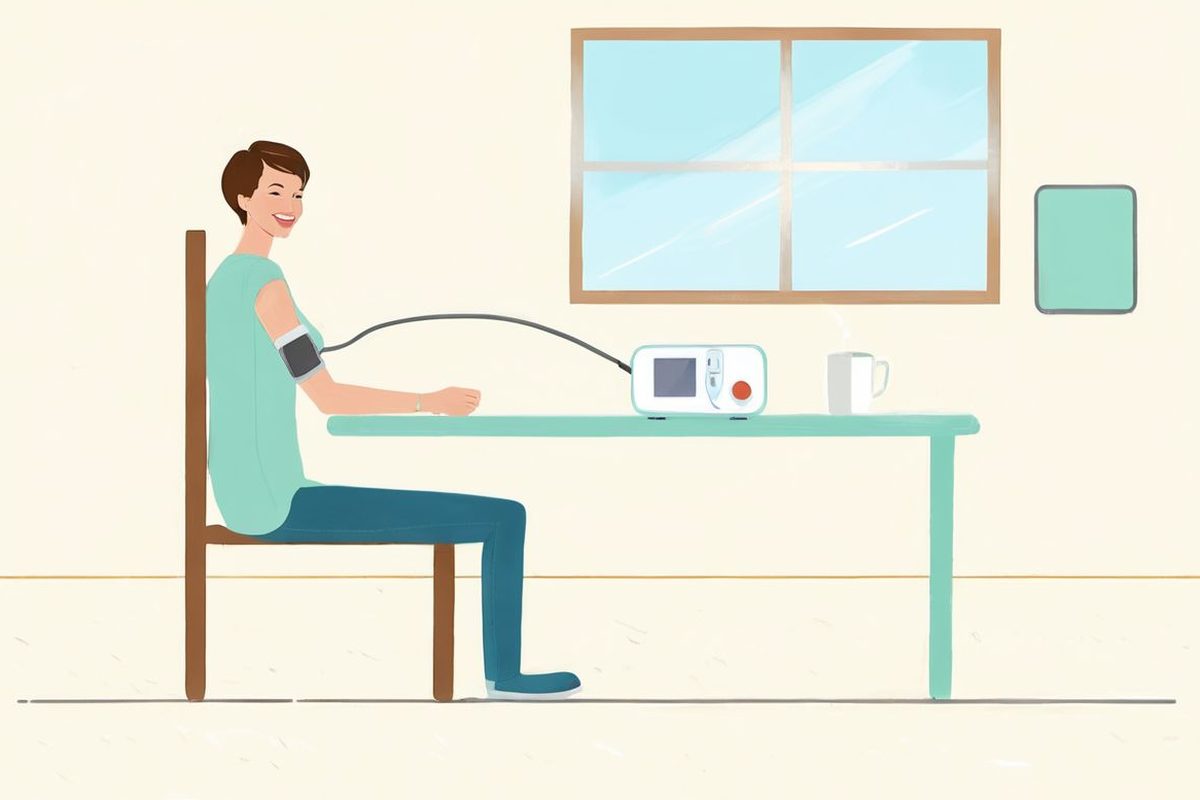
- Check your position. Back supported, feet flat, arm resting on a table at heart height.
- Check the cuff. It should be on bare skin, about 1 to 2 cm above your elbow, snug enough that two fingers just fit underneath.
- Stay still and silent while the monitor works.
- Take two or three readings, at least 1 minute apart.
- Write down every result, and whether the symbol appeared each time.
Our home blood pressure guide has more detail on getting an accurate reading.
Keep a short record
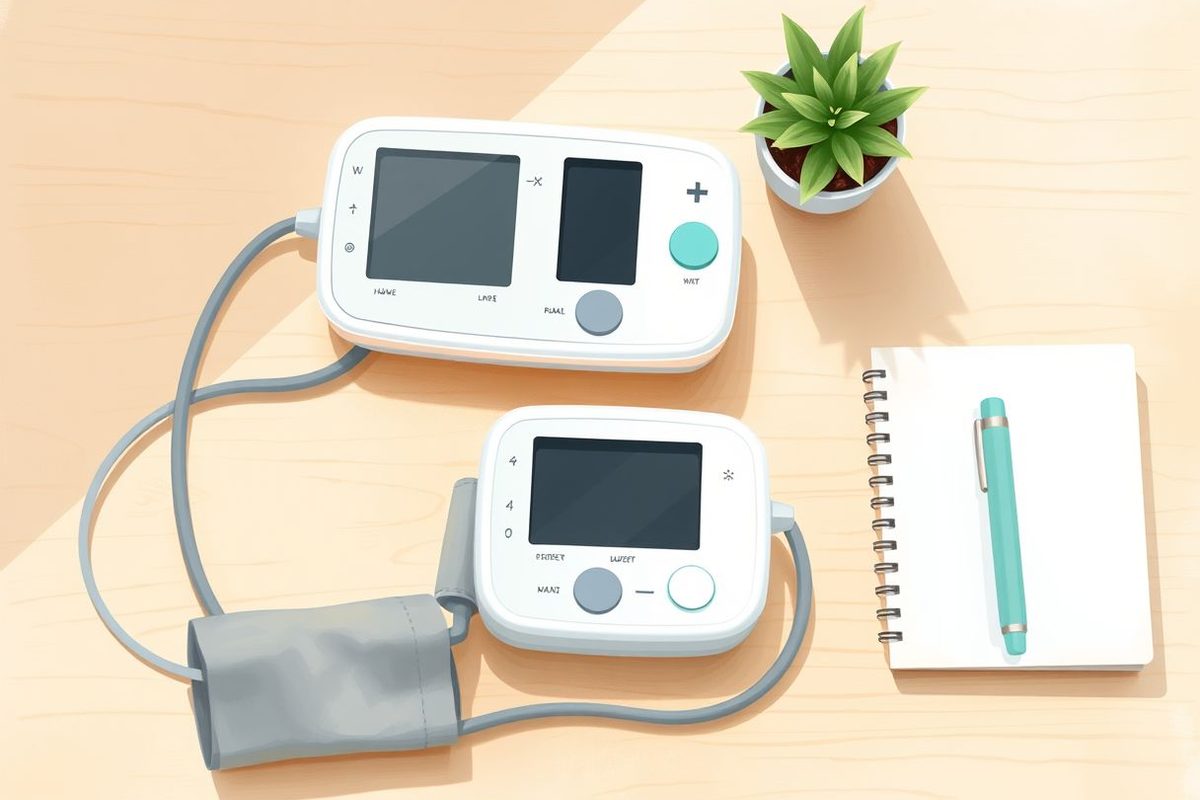
Over the next few days, note the date, time, blood pressure, pulse and whether the symbol appeared. Add any symptoms, such as fluttering, breathlessness or dizziness. A photo of the monitor screen is fine. If your monitor has an app, you may be able to export a report.
You can also check your own pulse at your wrist. The British Heart Foundation says a normal resting pulse is usually between 60 and 100 beats a minute. With AF, the beats have no set pattern. See how to check your pulse.
Seeing your GP
Book a routine GP appointment if:
- the symbol keeps appearing over several readings or days
- you notice palpitations that keep coming back or are getting worse
- you are worried, even if you feel well
Take your record with you. Your GP will check your pulse. If they think you could have AF, they may arrange tests and refer you to a heart specialist (cardiologist). The main test is an ECG, a quick, painless recording of your heart’s rhythm. If the rhythm comes and goes, you may be asked to wear a small portable ECG recorder, usually for 24 to 48 hours and sometimes for up to 7 days.
The NHS says the heart specialist may also arrange blood tests, an echocardiogram (an ultrasound scan of the heart) and a chest X-ray, to look for other causes and check how your heart is working.
If you are diagnosed with AF
There is no cure for AF, but treatment helps control the symptoms and lowers the risk of complications. Your doctor will plan treatment with you. It may include:
- tablets to slow your heart rate, such as beta blockers
- tablets to control the rhythm, to help your heart beat more steadily
- anticoagulants (blood thinners), which lower the risk of blood clots and stroke
- procedures, such as using an electric shock to reset the rhythm (cardioversion) or treating a small area of the heart that causes the faulty signals (ablation)
The NHS says most people can carry on doing most things as usual, including exercise. The BHF says that with the right treatment and lifestyle, you can still live well with AF.
A note on blood pressure readings and AF
Automatic monitors may not measure blood pressure accurately if your pulse is irregular. NICE advises clinicians to check blood pressure by hand when a person’s pulse is irregular. If you have been diagnosed with AF, ask your GP or nurse whether home readings are still useful for you, and how to take them.
Questions people ask
What does “irregular heartbeat detected” on my blood pressure monitor mean?
The monitor noticed uneven gaps between your beats during that reading. Movement, talking or AF can all cause it. It is a prompt to check, not a diagnosis. See what the symbol means.
Should I repeat the reading?
Yes. Rest for a few minutes, then take two or three readings at least 1 minute apart, sitting still with your arm supported. If the symbol keeps appearing, book a routine GP appointment.
Can a home blood pressure monitor diagnose AF?
No. Some monitors can flag a pattern that could suggest AF, but only an ECG, checked by a healthcare professional, can confirm it.
How accurate are irregular heartbeat alerts?
No home monitor is perfect. Movement or a loose cuff can cause a false alarm, and a normal result does not rule out AF. That is why an ECG is needed to confirm it.
When should I get urgent help?
Call 999 if you have an irregular or fast heartbeat with chest pain, breathlessness, fainting or signs of a stroke. See when to get help for the full list.
What will my GP do?
Check your pulse and, if they think you could have AF, arrange an ECG and refer you to a heart specialist. You may have blood tests and other checks too.
What treatments are there for AF?
Tablets to control your heart rate or rhythm, blood thinners to lower the risk of stroke, and sometimes procedures such as cardioversion or ablation. Your doctor will tailor this to you.
Does AF increase the risk of stroke?
Yes. With AF, blood can collect in the heart and form clots that may travel to the brain. Blood thinners lower this risk.
Can a smartwatch help?
Many smartwatches offer irregular rhythm alerts and a short ECG you can save as a PDF for your GP. They are prompts to get checked, not a diagnosis. See smartwatch heart alerts.
How should I record my readings for the GP?
Note the date, time, blood pressure, pulse, whether the symbol appeared, and any symptoms. Photos of the screen or an app report are fine.
When to get help
Call 999 if you have a fast or irregular heartbeat and any of these:
- chest pain
- shortness of breath
- sweating, or feeling or being sick
- fainting, feeling dizzy or falling over
- a severe headache
- weakness or numbness on one side of your face or body
- blurred vision or loss of sight
- confusion or difficulty speaking
These can be signs of a heart attack or stroke. Do not drive yourself to A&E.
Get an urgent GP appointment, or use NHS 111 (online or by phone) if you had palpitations with chest pain, breathlessness or fainting but they have now stopped.
Contact your GP practice (routine appointment) if the irregular heartbeat symbol keeps appearing, or you have palpitations that keep coming back, last more than a few minutes or are getting worse.
Ask a pharmacist whether any of your medicines could affect your heart rhythm. The NHS lists some medicines, such as levothyroxine, lithium and some asthma medicines, among the things that can make AF more likely.
For non-urgent questions, you can talk to a cardiac nurse on the British Heart Foundation Heart Helpline on 0808 802 1234 (free). It is not an emergency service.
If you are thinking of buying a monitor
Some home monitors are designed to flag possible AF during a routine blood pressure check. See our guide to choosing a validated blood pressure monitor. Smartwatches can also give heart rhythm alerts. Our page on smartwatch heart alerts covers those.