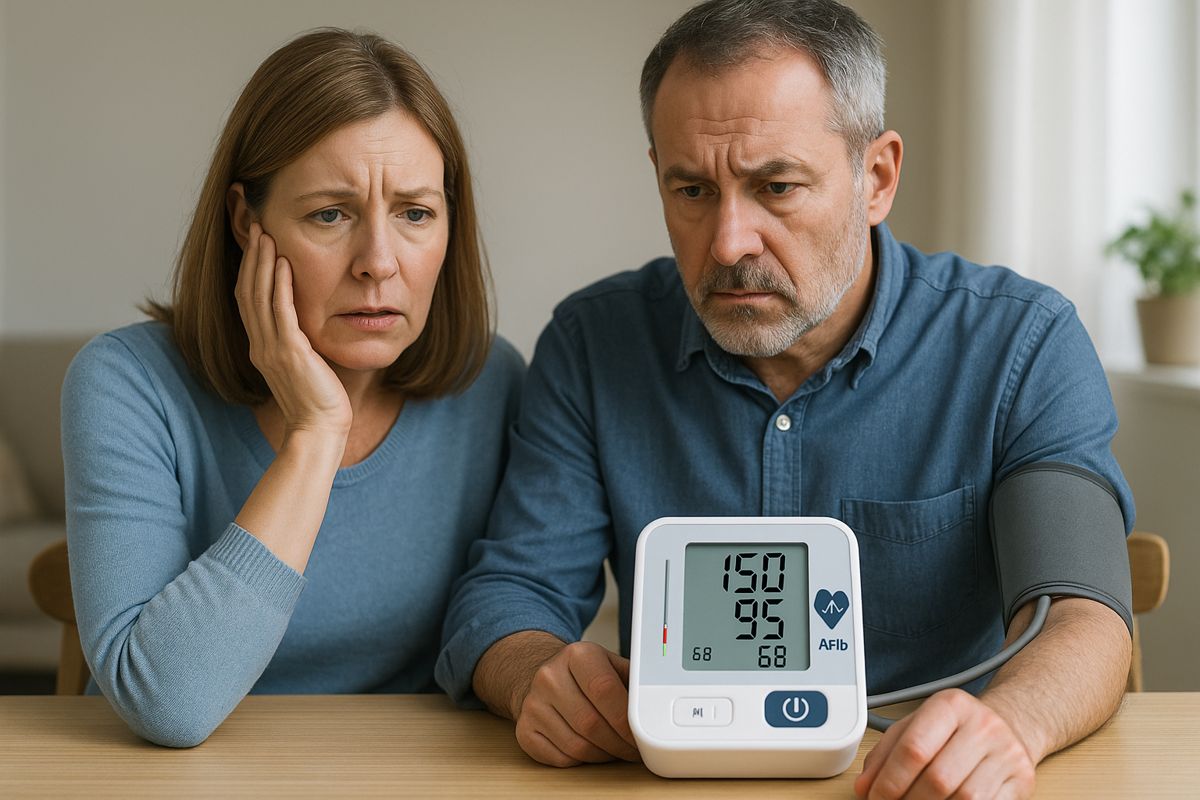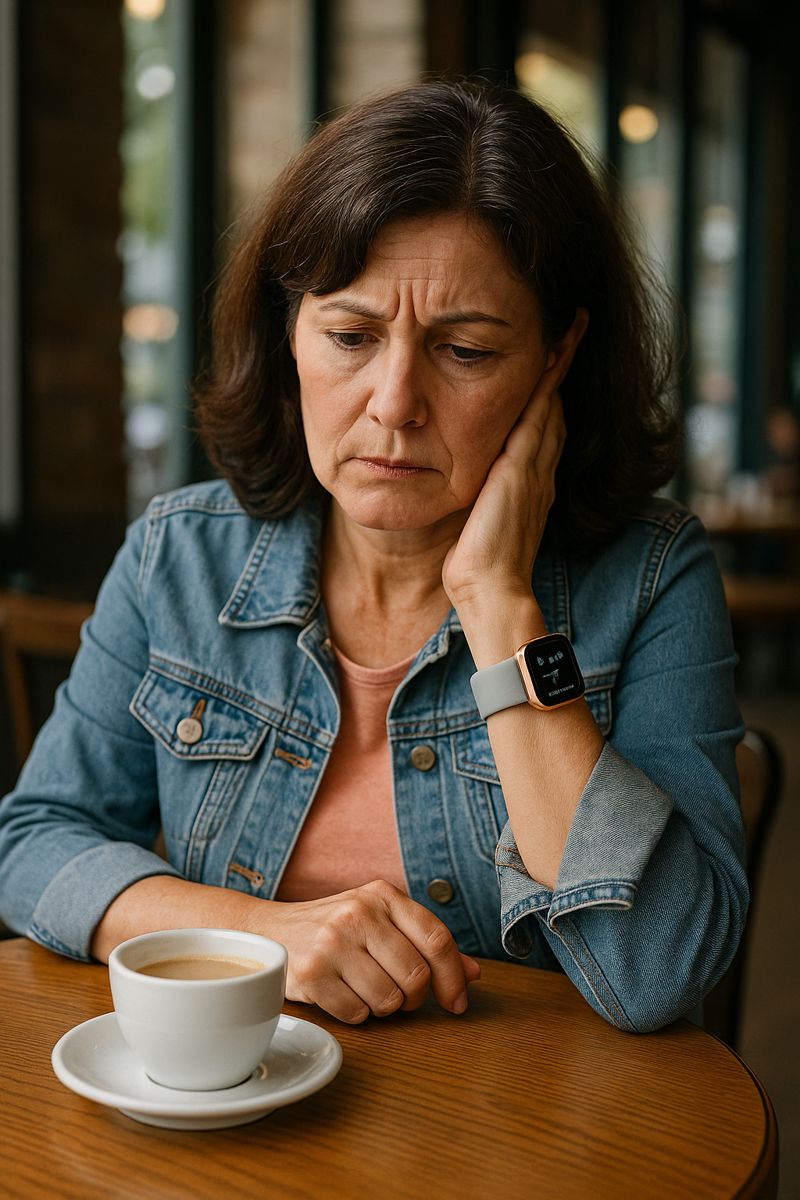
A smartwatch heart alert is a prompt to get checked, not a diagnosis. If you feel unwell with it, such as chest pain, breathlessness or fainting, call 999. If you feel well, stay calm, save the alert, and book a GP appointment. A “normal” result or no alert does not rule out a heart problem, so see your GP about any symptoms that worry you.
The main types of alert
Irregular rhythm alerts
Many watches check your pulse in the background using a light sensor on the back. If the watch sees an irregular pattern several times, it may tell you it has found signs of atrial fibrillation (AF). AF is a common heart rhythm problem where the heartbeat is not steady. It often causes no symptoms, but the British Heart Foundation (BHF) says it is linked to a fivefold increase in the risk of stroke. Treatment lowers that risk, which is why an alert is worth following up.
Apple says these checks are not continuous. They can miss AF, and an alert may be caused by a different irregular rhythm. Apple’s feature is not meant for people under 22 or for people already diagnosed with AF.
ECG apps
Some watches can record a single-lead ECG (electrocardiogram). You rest a finger on the watch for about 30 seconds. The app then gives a result such as “sinus rhythm” (a regular rhythm), “atrial fibrillation”, “inconclusive” or “poor recording”.
A watch ECG is similar to one lead of the 12-lead ECG used by the NHS. It is useful for capturing what your heart is doing when you have symptoms. Apple, Samsung and Withings all say their ECG apps cannot detect a heart attack.
High or low heart rate alerts
These tell you when your heart rate stays above or below a level. On an Apple Watch you choose the level yourself. Fitbit and Withings devices alert you when your resting heart rate is outside your usual range. A single odd reading is often caused by a loose strap or movement. See what a normal heart rate is.
High blood pressure (hypertension) notifications
Some newer watches look for signs of long-term high blood pressure. Apple’s hypertension notifications analyse heart sensor data in 30-day periods. Apple lists the United Kingdom as a country where the feature is available. It works on Apple Watch Series 9 or later and Ultra 2 or later, not on Apple Watch SE. It is for people aged 22 and over who are not pregnant and have not been diagnosed with high blood pressure.
Apple is clear that the watch does not measure your blood pressure, and that not everyone with high blood pressure will get a notification. Apple says the Series 12 and Ultra 4 may not have the feature in some regions while approvals are completed, so check Apple’s feature availability page for your model.
How to turn on hypertension notifications
Apple’s instructions, checked on 28 October 2026:
- Update your iPhone and Apple Watch to the latest software. You need an iPhone 11 or later.
- Make sure Wrist Detection is turned on for your watch.
- Open the Health app on your iPhone.
- Tap your picture or initials at the top right.
- Tap Health Checklist, then tap Set Up under Hypertension Notifications.
- Confirm your age and whether you have been diagnosed with high blood pressure, then follow the instructions on screen.
To turn them off, go back to Health Checklist, tap Hypertension Notifications and switch them off. If you get a notification, Apple suggests measuring your blood pressure with an upper-arm cuff for 7 days and sharing the results with your doctor.
What the big studies found
Two large studies tested whether watch alerts for an irregular rhythm pick up AF. Both took place in the United States, in adults who did not already know they had AF. The Apple study was funded by Apple.
- Apple Heart Study (2019). About 419,000 people took part. Over a median of about 4 months, 0.5% got an irregular pulse alert. Of those who then wore a heart monitor patch for up to a week, about a third (34%) had AF on the patch. When the watch alerted again while the patch was on, the patch showed AF 84% of the time.
- Fitbit Heart Study (2022). About 456,000 people took part. Over about 4 months, 1% got an alert (4% of those aged 65 and over). Of those who then wore a heart monitor patch for a week, about a third (32%) had AF on the patch. When the watch alerted again while the patch was on, the patch showed AF 98% of the time.
What this means for you:
- Alerts were uncommon.
- An alert often pointed to a real irregular rhythm. But a patch worn for about a week found AF in only about a third of people who had an alert.
- These studies tested alerts, not health outcomes. They do not show that wearing a watch prevents strokes.
So an alert is worth acting on, by contacting your GP practice. But it is not a diagnosis, and no alert does not mean all is well.
How accurate are blood pressure readings from a watch?
Some watches and rings now show a blood pressure number, or warn of possible high blood pressure, without a cuff. These are called cuffless devices.
The British and Irish Hypertension Society (BIHS) checks blood pressure monitors for accuracy. It says it is not currently approving any wearable or cuffless blood pressure devices for routine clinical use. It also points out that being on sale, or cleared by a regulator, is not the same as being shown to work well in practice.
The European Society of Hypertension (ESH) has a group of experts on blood pressure measurement. Its statements say:
- cuffless devices need different accuracy tests from cuff monitors, and the agreed tests are still being developed
- some need setting up against a cuff reading, and may drift away from it over time
- guidelines do not recommend them for diagnosing or managing high blood pressure
A few watches have a small inflatable cuff built into the strap, which squeezes your wrist like a wrist monitor. They still count as wrist measurements, and none appeared on the BIHS list of monitors validated for home use when it was last checked. Our smartwatches for heart health page has more on these.
So if a watch suggests your blood pressure may be high, or you want to know your numbers, use an upper-arm cuff monitor that has passed independent accuracy checks. See choosing a validated monitor and how to check your blood pressure at home. Your GP practice will also want cuff readings, not watch readings.
What to do if you get an alert
- Check how you feel. If you have chest pain, breathlessness, fainting or the other symptoms in the next section, call 999. Do not wait to repeat the test.
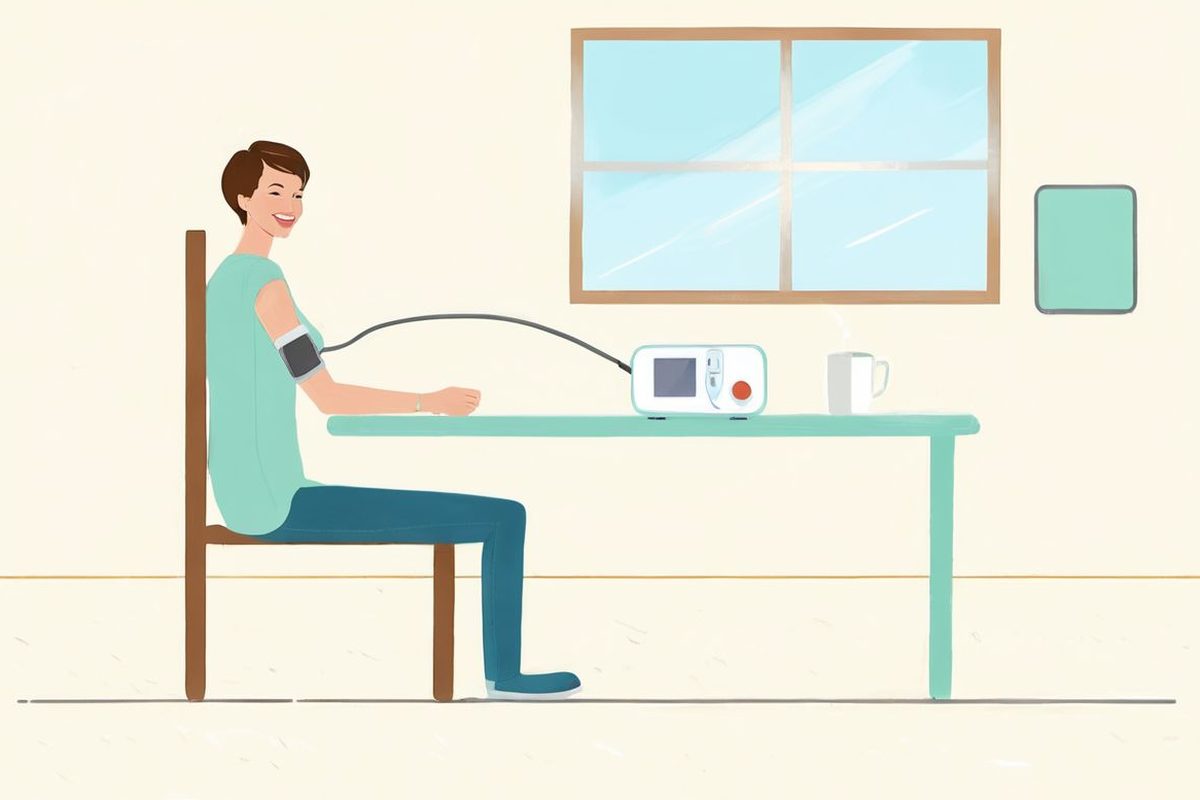
- Sit down and rest for a few minutes. Then repeat the check if your watch has an ECG app. Rest your arms on a table and keep still.
- Check your pulse by hand. Feel it at your wrist for 30 seconds and notice whether it feels steady. See how to check your pulse.
- Save the evidence. Take a screenshot of the alert. Most ECG apps can export a PDF to share with your GP. Note the date, time and what you were doing.
- Contact your GP practice. Explain that your watch has flagged a possible irregular rhythm or high blood pressure. They may check your pulse and arrange a proper ECG or other tests.
- For a blood pressure alert, measure with a cuff. Apple suggests logging readings with an upper-arm cuff for 7 days. Follow our guide to doing a week of readings for your GP and share the results with your GP practice.
- Do not change any medicines because of a watch result unless a clinician tells you to.
If your home blood pressure monitor shows an irregular heartbeat symbol, see irregular heartbeat alerts.
Sending cuff readings to your phone
Many cuff monitors can send readings to a phone app by Bluetooth, which makes a 7-day log easier to share. Apple’s Health app has a Blood Pressure Log. Samsung lets makers of compatible Bluetooth blood pressure monitors and glucose monitors send readings straight into the Samsung Health app, through a developer kit Samsung launched in September 2024. Check the monitor’s box or the maker’s website to see which apps it works with. Your GP practice will still want the numbers themselves, not a watch estimate.
What smartwatches cannot do
- They cannot diagnose AF, high blood pressure or any other condition. Only a clinician can.
- They cannot detect a heart attack or stroke.
- “No alert” does not mean your heart is healthy. Background checks only happen some of the time.
- Readings are less reliable if the watch is loose, you are moving, or your skin is cold. Apple also lists dark wrist tattoos as a possible problem. The BHF adds sweat, temperature and lighting conditions.
- Studies on skin tone are mixed. A 2024 review of the research found wrist pulse readings were no more biased in people with darker skin, but readings could be off in people of every skin tone. An earlier review found some studies showing lower accuracy in darker skin. If a reading does not match how you feel, check your pulse by hand.
- Blood oxygen apps on watches are not medical tests. Apple says its Blood Oxygen app is for wellness only. Use a proper pulse oximeter if a clinician has asked you to check your oxygen.
The British Heart Foundation advises using trackers for general monitoring, ignoring a single unusual reading, and speaking to your GP if unusual readings keep happening. It also notes that constant checking makes some people anxious. If that is you, it is fine to turn alerts off and have your checks done at your GP practice or pharmacy instead.
If you are thinking of buying a watch for its heart features, see smartwatches for heart health.
Can I lower my risk of AF?
Not every case can be prevented, but the NHS suggests things that help, and these also help if you already have AF:
- do not drink too much alcohol
- do not smoke
- try to keep to a healthy weight
- exercise regularly, aiming for at least 150 minutes of moderate exercise a week, but do not exercise too hard, as that can trigger AF
- avoid triggers such as caffeine, stress, dehydration and lack of sleep
High blood pressure, an overactive thyroid and sleep apnoea are linked to AF. If you have one of these, keeping it under control with your GP practice helps your heart too. The NHS atrial fibrillation page has more.
When to get help
Call 999 or go to A&E if you have palpitations that do not go away, or a fast or irregular heartbeat with any of these:
- chest pain
- shortness of breath
- fainting, or feeling faint or dizzy
- sweating, or feeling or being sick
- a severe headache
- weakness or numbness on one side, blurred vision or loss of sight, confusion or difficulty speaking
Do not drive yourself to A&E. Ask someone to take you, or call 999.
Ask for an urgent GP appointment, call 111 or use NHS 111 online if you had these symptoms but they have now stopped.
Contact your GP practice if:
- your watch has flagged a possible irregular rhythm, AF or high blood pressure
- you have palpitations that keep coming back, are getting worse or last more than a few minutes
- you get repeated “inconclusive” ECG results, or repeated high or low heart rate alerts
- you have a heart condition or a family history of heart problems and are worried