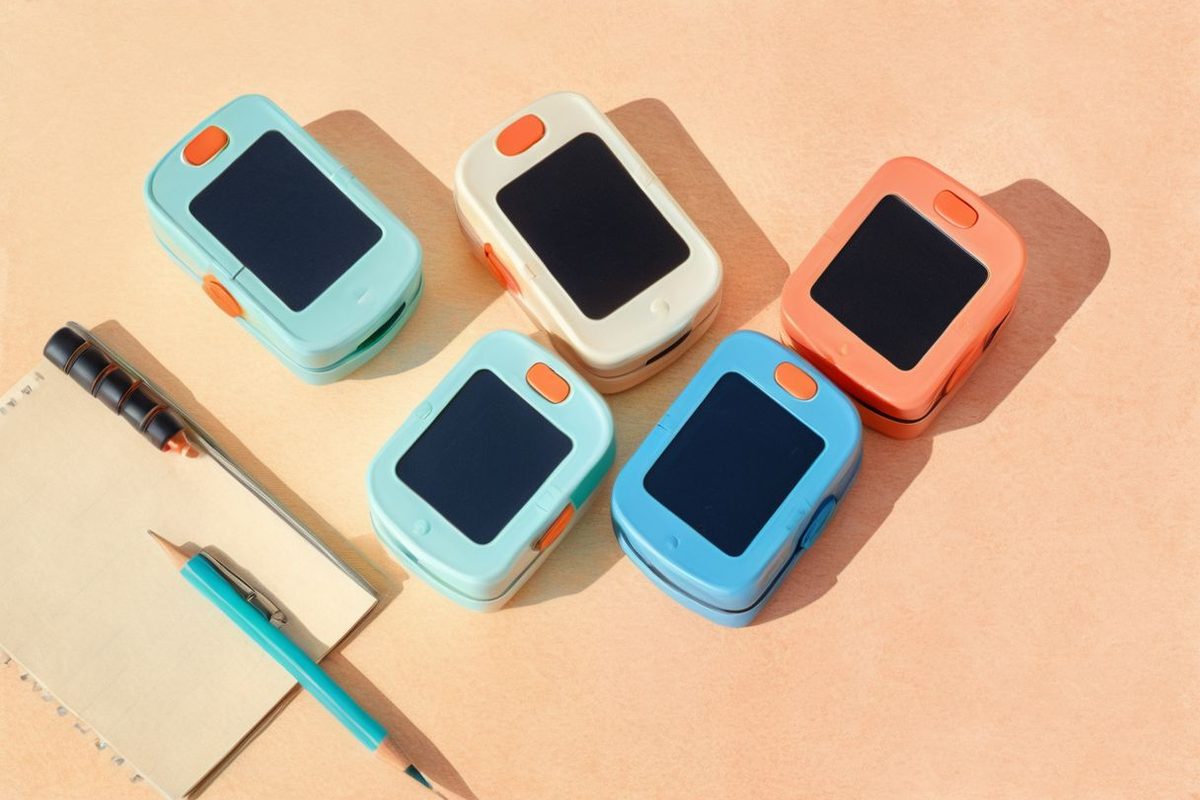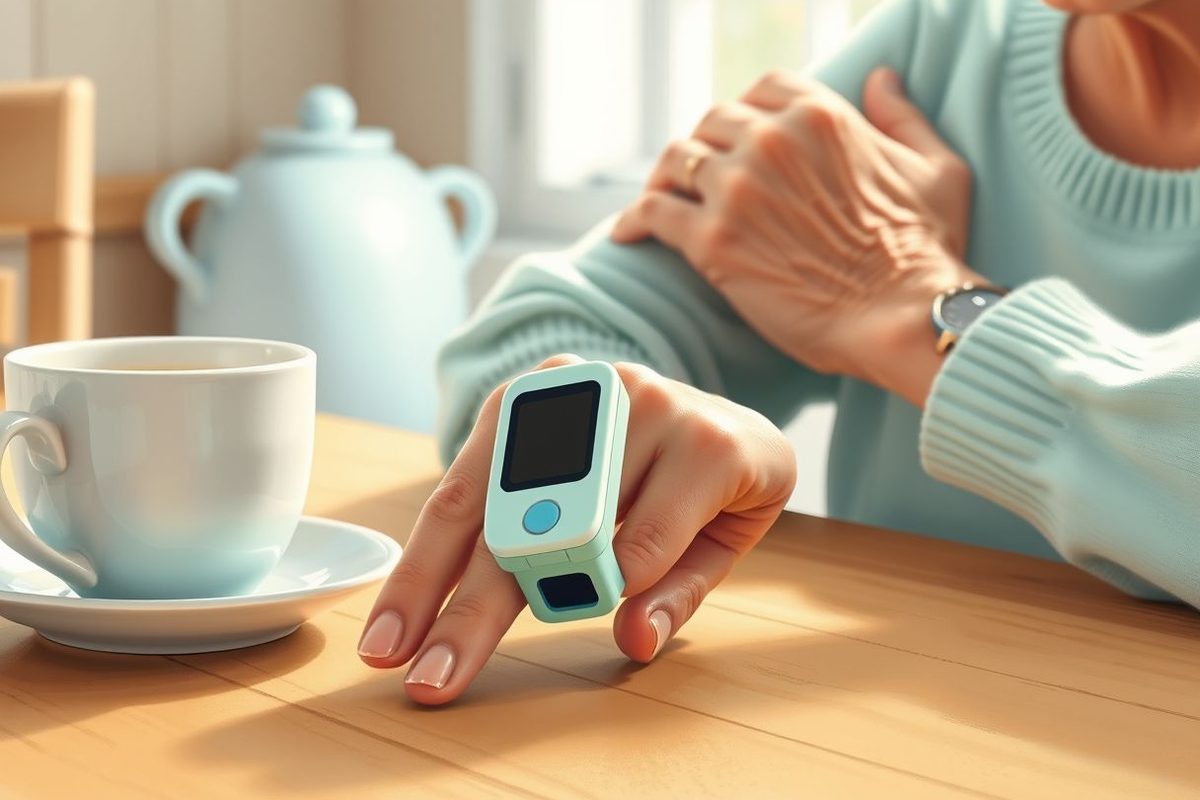
A pulse oximeter clips on your finger and shows your blood oxygen level (SpO2) and your pulse. Rest first, use a warm finger without nail varnish, and wait until the numbers settle. In NHS home-monitoring guidance, 95% or above is the ideal range. A reading that stays at 92% or lower means call 999. But how you feel matters as much as the number, especially if you have darker skin.
Before you start
Pulse oximeters are most useful when a doctor or nurse has asked you to monitor your oxygen at home. The medicines regulator, the MHRA, does not recommend using one unless a clinician has advised it and shown you how. If you have a lung condition such as COPD, your normal level may be lower than other people’s. Ask your GP or care team what your target is.
When you first get one, take a few readings while you feel well. This tells you what is normal for you, so you can spot a change later. If other people in your home will use it, check theirs too.
How to take a reading
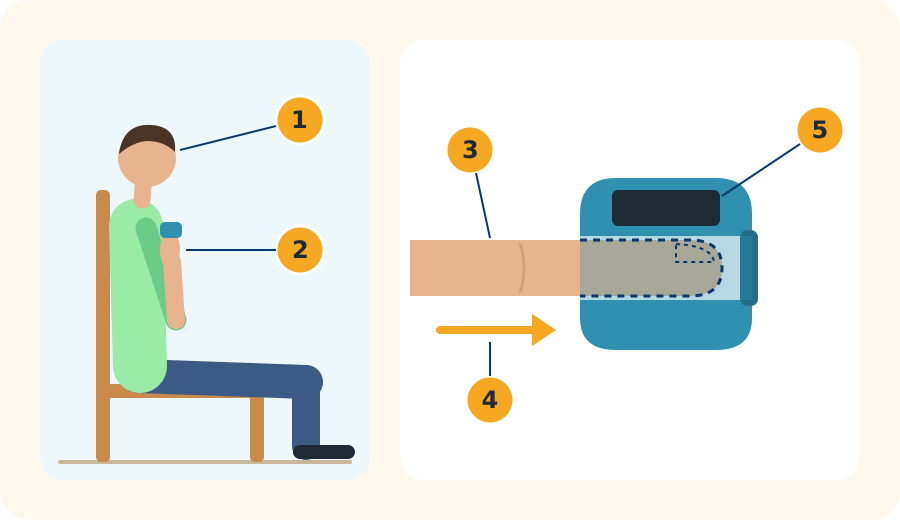
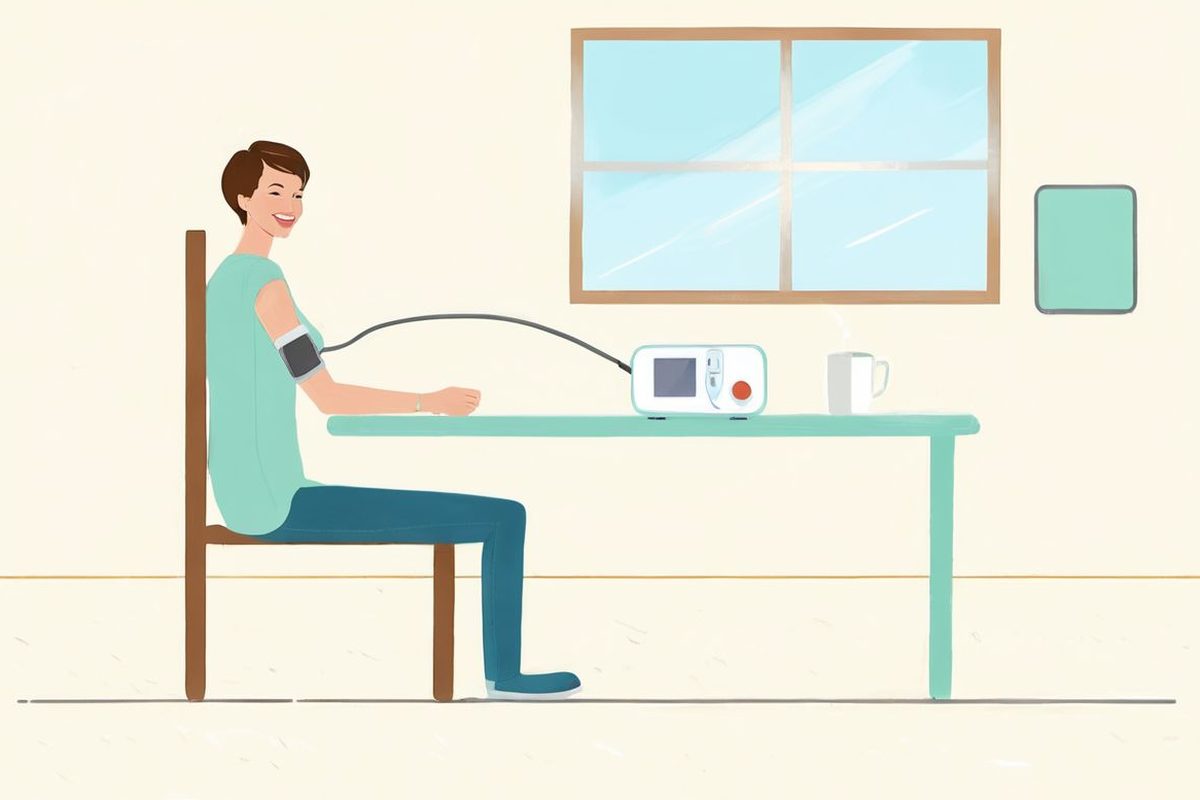
- Sit and rest for at least 5 minutes first.
- Rest your hand on your chest and keep it still.
- Use a warm finger with no nail varnish or false nails.
- Clip it on your index or middle finger, with the fingertip fully inside.
- Wait at least a minute, until the numbers settle.
- Remove nail varnish or false nails from the finger you will use. They can block the light.
- Warm your hand if it is cold. Cold fingers give weak or wrong readings.
- Sit and rest for at least 5 minutes.
- Rest your hand on your chest, at heart level, and keep it still.
- Switch the oximeter on and clip it to your index or middle finger. It should fit snugly: too tight or too loose can upset the reading.
- Leave it in place for at least a minute, or longer if the numbers keep changing.
- Write down the highest reading once it has stayed the same for 5 seconds.
- Make sure you know which number is which. SpO2 is your oxygen level, shown as a percentage. PR or bpm is your pulse.
If your GP or care team has asked you to monitor, NHS guidance suggests taking readings 3 times a day at the same times, and whenever you feel worse. Keep a diary of the numbers and how your breathing feels. You can download a one-page readings chart and diary (PDF) to print.
If you or someone you care for prefers simple words and pictures, NHS England has an Easy Read guide: Using a pulse oximeter to check you are OK (Easy Read, PDF). It was written during COVID-19, but the steps for taking a reading are the same.
NHS England’s home-monitoring diary is also available in other languages. See NHS England: COVID-19 diary, translated versions.
Videos: how to use a pulse oximeter
These short videos show the steps. They were made during the COVID-19 pandemic, so they talk about COVID, but the way you take a reading has not changed. If a video gives different levels for when to get help, follow the table further down this page, or your own care team’s advice.
 Play video: How to use a pulse oximeter at home, from NHS
How to use a pulse oximeter at home
 Play video: How to use a pulse oximeter at home, from eGPlearning (Dr Hussain Gandhi)
How to use a pulse oximeter at home
In other languages
NHS teams in Sussex and East Berkshire made versions of the “how to use a pulse oximeter” video, spoken or subtitled in other languages:
 Play video: How to use a pulse oximeter (Arabic subtitles / العربية), from NHS Sussex
How to use a pulse oximeter (Arabic subtitles / العربية)
 Play video: How to use a pulse oximeter (Urdu / اردو), from East Berkshire Primary Care (NHS)
How to use a pulse oximeter (Urdu / اردو)
 Play video: How to use a pulse oximeter (Bengali / বাংলা), from East Berkshire Primary Care (NHS)
How to use a pulse oximeter (Bengali / বাংলা)
 Play video: How to use a pulse oximeter (Hindi / हिन्दी), from East Berkshire Primary Care (NHS)
How to use a pulse oximeter (Hindi / हिन्दी)
 Play video: How to use a pulse oximeter (Portuguese subtitles / Português), from NHS Sussex
How to use a pulse oximeter (Portuguese subtitles / Português)
 Play video: How to use a pulse oximeter (Nepali / नेपाली), from East Berkshire Primary Care (NHS)
How to use a pulse oximeter (Nepali / नेपाली)
 Play video: How to use a pulse oximeter (Polish / Polski), from East Berkshire Primary Care (NHS)
How to use a pulse oximeter (Polish / Polski)
Know of another NHS-made video in your language, or spotted a mistake? Email [email protected].
What the readings mean
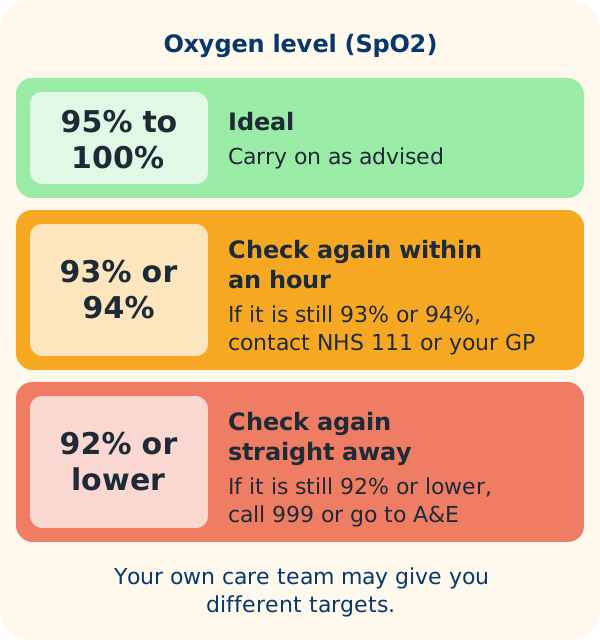
These levels come from NHS England’s home monitoring guidance. It was written for COVID-19, but it is the newest NHS guidance with levels for home use. Your own care team may give you different targets.
| Oxygen level (SpO2) | What to do |
|---|---|
| 95% to 100% | Ideal. Carry on as advised |
| 93% or 94% | Check again within an hour. If it is still 93% or 94%, contact NHS 111 or your GP |
| 92% or lower | Check again straight away. If it is still 92% or lower, call 999 or go to A&E |
If your usual level is below 95% and it stays lower than usual, contact NHS 111 for advice and have your readings ready.
You may still see older advice online, including on an earlier version of this site, that said to call 111 below 92% and 999 below 88%. Do not use those levels. The NHS levels in the table above are the ones to follow.
Why readings can be wrong
Skin tone
Pulse oximeters can overestimate oxygen levels in people with darker skin. This means the screen may show a higher number than your real level. An independent review for the government found the problem is worse when oxygen levels are already low. The MHRA has also warned about it.
A study published in The BMJ in January 2026 tested five fingertip oximeters that the NHS had given patients for home use. All five read higher in people with darker skin, by about 0.6 to 1.5 percentage points on average. That sounds small, but it means a low oxygen level is more likely to be missed.
This does not mean you should stop using one. The advice is:
- keep using your oximeter, and look at changes over time, not one number
- know your normal reading, so you can see if it falls
- watch for other warning signs, such as getting more breathless, chest pain, a fast heartbeat, or cold hands and feet
- get help if you feel worse, even if the reading looks fine
Signs of low oxygen on brown or black skin
Low oxygen can make skin or lips look blue or grey. The NHS says black or brown skin may turn grey, and that this may be easier to see on the palms of the hands, soles of the feet, lips, gums and inside the eyelids. Get help straight away if you see this (see when to get help below).
Talking to a clinician by phone
A doctor or nurse on the phone cannot see you. Tell them your usual reading, your reading now, and how your breathing feels. If you have darker skin, you can mention it and ask them to bear in mind that your oximeter may read high. NHS England says to raise any concerns about your oximeter with a health or care professional. If you feel worse and think you are not being listened to, say so clearly and ask what to do next. If you are very unwell, call 999.
If your readings jump about when you are well
Readings can vary between devices and between people. If your numbers keep jumping about when you feel well and are doing everything right, the oximeter may not be reliable for you. Tell your GP or care team. Rely on how you feel and the warning signs below, not the screen.
Other things that affect readings
- nail varnish, false nails, henna or tattoo ink on the finger
- cold hands or poor circulation
- moving during the reading
- a probe that is too tight or too loose
- bright light shining on the sensor
Smartwatch blood oxygen readings are not a substitute. NHS England says smartwatches are generally not medically accurate and should not be used to monitor oxygen levels.
For health professionals
The MHRA guidance on the use and regulation of pulse oximeters, the independent review on equity in medical devices and The BMJ study summary cover skin tone and oximeter accuracy in more depth.
No oximeter is “NHS approved”
The NHS does not approve or endorse brands of pulse oximeter for the public. Be wary of sellers who claim otherwise. The MHRA says pulse oximeters for medical use are regulated as medical devices and should carry a CE, CE UKNI or UKCA mark. See choosing a pulse oximeter for what to look for.
If you think your oximeter is giving wrong readings, you can report it to the MHRA through the Yellow Card scheme.
Common questions
What does a pulse oximeter measure?
It measures two things: how much oxygen your blood is carrying (SpO2, shown as a percentage) and your pulse rate. It shines light through your fingertip and works out the oxygen level from how much light your blood absorbs. It picks up your pulse from the small changes in blood flow with each heartbeat. It does not measure carbon dioxide or how fast you are breathing.
How accurate are pulse oximeters?
They are good at showing changes over time, but they do not give an exact figure. To meet the standard the MHRA refers to, an oximeter’s readings must be close to the true level overall, with an average error (measured as a root-mean-square) of no more than 4 percentage points across the range from 70% to 100%. A single reading can be further out than that. Below 70% they are less accurate. Cold fingers, movement, nail varnish and darker skin can all make readings less reliable. This is why your trend, and how you feel, matter more than one number.
Should I keep one at home for colds, flu or RSV?
The MHRA does not recommend using a pulse oximeter at home unless a clinician has advised it, shown you how, and is reviewing the results. For most coughs, colds, flu and RSV, a thermometer and knowing the warning signs below are more useful. If you or someone you care for has a lung or heart condition, ask your GP or care team whether home oxygen checks would help you.
Can I use one on a baby or child?
Only check a baby’s or child’s oxygen level at home if their care team has asked you to and shown you how. A finger oximeter made for adults may not fit a small finger well, and a loose fit can give a wrong reading. If you are worried about a child’s breathing, do not wait for a reading: use the advice in when to get help.
Where can I get a pulse oximeter?
If your GP or care team wants you to monitor at home, ask whether they can give you one. Some NHS home-monitoring services provide oximeters and may ask you to return them afterwards.
You can also buy one. Many pharmacies sell them, including Boots, which sells its own-brand finger pulse oximeter. Argos sells the Kinetik Wellbeing finger pulse oximeter (PO6L), which is the low-cost pick on our kit page; check stock online for collection near you. The British Heart Foundation’s online shop also sells a fingertip oximeter.
Buying online or in a shop makes no difference to accuracy. What matters is the model and the markings on it. See choosing a pulse oximeter for which to buy.
When to get help
Call 999 or go to A&E straight away if:
- your oxygen level stays at 92% or lower after you check again
- you are too breathless to finish a short sentence while resting
- your breathing suddenly gets worse
- your lips, tongue or face suddenly turn blue or grey. On brown or black skin this may be easier to see on the lips, gums or inside the eyelids
- you cough up blood
- you feel cold and sweaty with pale or blotchy skin
- you collapse or faint
- you become confused, agitated or very drowsy
- you have stopped peeing, or are peeing much less than usual
- you have a rash that does not fade when you roll a glass over it
Contact NHS 111 (online or by phone) or your GP practice if:
- your oxygen level is 93% or 94%, and stays there when you check again within an hour
- your oxygen level stays lower than your usual level
- your fingers, toes, hands or feet look blue or grey. On brown or black skin this may be easier to see on the palms of the hands or soles of the feet
- you are getting more breathless, or struggle to breathe when you stand up or move about
- you feel something is wrong, such as feeling very weak, not eating, or not managing to look after yourself